English-Speaking, U.S.-Trained Dental Care in Jongno-gu, Seoul | +82 2-735-2859
en-US

Computer-Guided Implant Surgery
Computer-guided implant surgery in Seoul for precise, safe dental implants. Advanced digital planning at New York S Dental Clinic in Jongno-gu.

Computer-Guided Implant Surgery

Replacing missing teeth requires both functional stability and aesthetic balance. Computer-Guided Implant Surgery is a modern advancement in dental implant treatment that enhances precision, safety, and long-term predictability. By using digital planning and guided placement techniques, this approach allows for highly accurate positioning of implants within the jawbone.
At New York S Dental Clinic, located at 309 Royal Palace, 7 Yulgok-ro 2-gil, Jongno-gu, Seoul (Somerset Palace Seoul Hotel building), computer-guided dental implants are carefully planned to support safe and structured treatment outcomes. As an English-speaking dentist in Seoul, the clinic provides implant solutions for both local and international patients seeking reliable and well-planned care.
What Is Computer-Guided Implant Surgery?
Computer-Guided Implant Surgery is a digitally assisted method of placing dental implants using advanced imaging and planning software. Instead of relying solely on freehand surgical placement, this technique uses detailed digital scans to determine the exact location, depth, and angulation of the implant before the procedure begins.
The process typically includes:
Digital imaging of the jaw and surrounding structures
Virtual implant positioning using specialized software
Creation of a custom surgical guide
Precise placement of the implant using that guide
By planning the procedure in advance, guided implant surgery improves clinical accuracy and reduces variability during the operation.
Why Accuracy Is Critical in Dental Implant Placement
Successful dental implant surgery depends heavily on precise positioning within the jawbone. If an implant is placed incorrectly, it may lead to complications such as:
Nerve irritation
Sinus involvement
Bite misalignment
Esthetic concerns
Difficulty fitting the final crown
Through 3D digital planning, important anatomical structures are identified before surgery. This allows the dentist to evaluate bone density, bone volume, and spatial relationships. By visualizing the area in detail, computer-guided implant placement helps reduce potential risks and improves procedural confidence.
The Step-by-Step Procedure
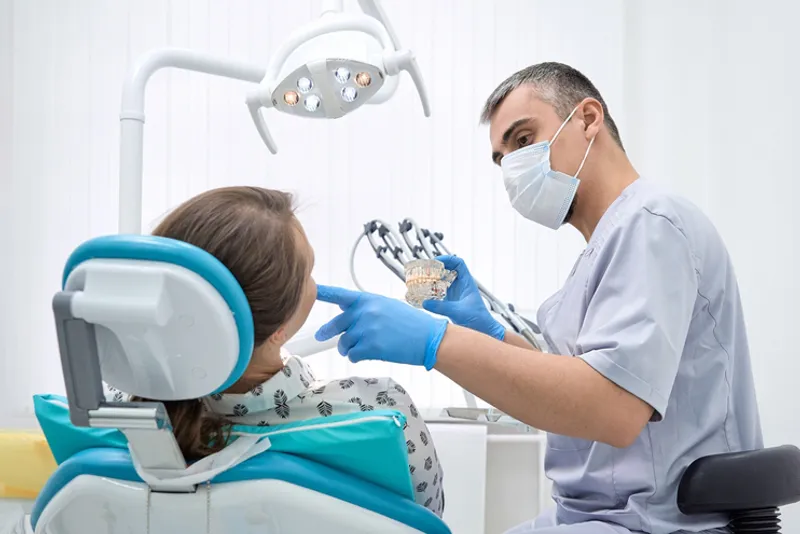
1. Comprehensive Consultation
The treatment process begins with a full dental evaluation. Patients who have missing teeth due to decay, trauma, or previous extraction may be considered for implant dentistry. The dentist assesses gum health, bone structure, and overall oral condition before recommending treatment.
Digital scans are then obtained to prepare for planning.
2. 3D Virtual Treatment Planning
Using digital software, the implant is virtually positioned in the optimal location. The dentist carefully determines the correct:
Implant angulation
Placement depth
Relationship to neighboring teeth
Alignment with the final restoration
This stage ensures that the implant will support both proper chewing function and a natural-looking result.
3. Fabrication of a Surgical Guide
A custom surgical guide is created based on the digital plan. This guide fits securely over the patient’s teeth or gums and directs the surgical instruments during the procedure. The use of a surgical guide for implants enhances consistency and procedural control.
4. Implant Placement
During the surgery, the guide ensures that drilling and implant placement follow the pre-established digital plan. Because the procedure is carefully mapped out in advance, guided implant surgery in Seoul may offer improved efficiency compared to traditional freehand methods.
Clinical Benefits of Computer-Guided Implants
Modern digital implant surgery provides several advantages:
Increased Precision
The implant is placed exactly according to the pre-surgical design.
Improved Safety
Critical anatomical structures are identified and protected during planning.
Predictable Outcomes
The digital workflow allows for better alignment between surgery and prosthetic restoration.
Efficient Workflow
Pre-planning can streamline the surgical procedure.
Enhanced Aesthetic Results
Proper implant positioning supports balanced gum contours and natural crown placement.
Who May Benefit from Computer-Guided Implant Surgery?
Computer-guided dental implants may be suitable for:
Patients missing one or multiple teeth
Individuals seeking implant-supported restorations
Patients requiring precise placement near nerves or sinus areas
International patients seeking structured treatment timelines
However, candidacy depends on individual bone condition and overall oral health. A thorough dental consultation is necessary to confirm suitability for implant treatment in Seoul.
Recovery and Healing Process

The recovery process following implant surgery is generally similar to traditional methods. Patients may experience:
Mild swelling
Temporary discomfort
Slight bruising
These symptoms typically improve within a few days. Patients are advised to maintain proper oral hygiene and attend follow-up appointments to monitor healing.
The critical phase of healing is osseointegration, where the implant fuses with the jawbone. This process usually takes several months. After successful integration, a custom restoration—often a zirconia crown or aesthetic prosthetic—is placed to restore full function.
Integration with Restorative Dentistry
The long-term success of a dental implant procedure depends not only on surgical placement but also on the final restoration. Proper coordination between surgical planning and prosthetic design ensures optimal chewing function and aesthetic balance.
At New York S Dental Clinic, implant procedures may be combined with:
Zirconia crowns
Aesthetic prosthetics
Resin restorations
Restorative dental treatments
This integrated approach supports structural stability and natural appearance.
Considerations for International Patients
For patients traveling to Korea for dental care, predictability is essential. Computer-guided implant surgery in Seoul allows for structured planning and clearer procedural timelines. Digital treatment mapping supports improved communication and reduces uncertainty.
New York S Dental Clinic serves as an English-speaking dental clinic in Jongno-gu, offering multilingual support in Japanese, Russian, and Mongolian. Clear communication is important for understanding treatment steps, recovery expectations, and follow-up planning.
Safety and Evidence-Based Approach
Computer-guided implant surgery is based on established principles of digital dentistry. When combined with thorough diagnostic assessment and careful planning, it enhances procedural control and consistency.
Core safety measures include:
Detailed digital imaging
Accurate measurement of bone structures
Sterile surgical protocols
Structured post-operative monitoring
Patients should always discuss potential risks, benefits, and alternatives with a qualified dental professional before proceeding with treatment.
Long-Term Outlook for Guided Dental Implants
When properly maintained, dental implants placed with computer-guided technology can provide long-term durability and stability. Successful outcomes depend on:
Strong bone integration
Proper bite alignment
Consistent oral hygiene
Regular dental check-ups
By optimizing implant positioning from the beginning, digital implant planning contributes to lasting functional and aesthetic results.
Conclusion
Computer-Guided Implant Surgery represents a significant advancement in modern implant dentistry. Through the integration of 3D imaging, virtual planning, and customized surgical guides, this technique enhances precision, safety, and long-term predictability.
At New York S Dental Clinic in Jongno-gu, Seoul, digital planning supports accurate implant placement for patients seeking reliable dental restoration. Whether for local residents or international visitors, computer-guided dental implants offer a structured, technology-supported approach focused on clinical accuracy and long-term oral health.
A personalized consultation remains essential to determine candidacy and develop an individualized treatment plan tailored to each patient’s needs.