English-Speaking, U.S.-Trained Dental Care in Jongno-gu, Seoul | +82 2-735-2859
en-US

Autogenous Bone Grafting
Autogenous bone grafting in Jongno-gu, Seoul restores jawbone using your own bone for stable, long-term dental implant success and predictable healing.

Autogenous Bone Grafting

When natural teeth are lost due to advanced decay, trauma, or periodontal disease, the surrounding jawbone gradually resorbs. Without adequate bone volume and bone density, placing a dental implant becomes more complex and less predictable. Autogenous Bone Grafting—also known as an autograft procedure—is widely recognized as one of the most reliable techniques to regenerate lost alveolar bone before implant placement.
At New York S Dental Clinic, located in Jongno-gu, Seoul, bone graft surgery is performed as part of a structured, diagnosis-driven implant treatment plan. The clinic emphasizes careful case selection, objective imaging analysis, and preservation of natural oral structures whenever possible.
Understanding Jawbone Loss and Implant Limitations
The alveolar bone exists to support teeth. Once a tooth is extracted or lost, the bone in that area no longer receives functional stimulation. Over time, this leads to:
Decreased bone height and width
Reduced bone density
Soft tissue collapse
Compromised implant stability
In many cases, advanced gum disease (periodontitis) accelerates bone destruction. Without proper regeneration, implant placement may result in instability or long-term complications.
Autogenous Bone Grafting is typically considered when:
There is insufficient bone for stable implant anchorage
Vertical or horizontal bone loss is severe
Previous implant failure occurred due to poor bone quality
Trauma or infection caused structural defects
What Is Autogenous Bone Grafting?
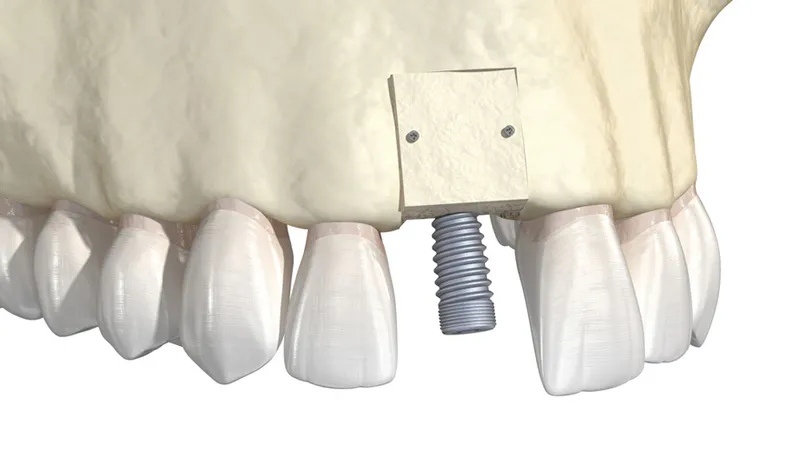
Autogenous Bone Grafting involves harvesting bone from the patient’s own body and transplanting it to the deficient area of the jaw. Because the graft originates from the same individual, it offers excellent biological compatibility.
The harvested bone may come from:
Intraoral donor sites such as the chin or posterior jaw
Adjacent areas during implant preparation
Autogenous bone contains living cells and natural growth factors that actively promote bone regeneration. It provides three key biological advantages:
Osteogenesis (new bone cell formation)
Osteoinduction (stimulation of surrounding cells to form bone)
Osteoconduction (structural scaffold for bone growth)
These properties make it one of the most predictable materials in advanced implant dentistry.
Why Autogenous Bone Is Considered the Gold Standard
Although synthetic graft materials and donor-derived substitutes are available, autogenous grafts offer distinct benefits:
1. Superior Compatibility
There is minimal risk of immune reaction since the graft comes from the patient.
2. Faster Integration
Living bone cells enhance healing and graft integration.
3. Strong Structural Support
Ideal for moderate to severe jawbone deficiency.
However, bone graft surgery should only be performed when clearly indicated. Proper diagnosis ensures that grafting is necessary and beneficial.
Comprehensive Diagnostic Evaluation
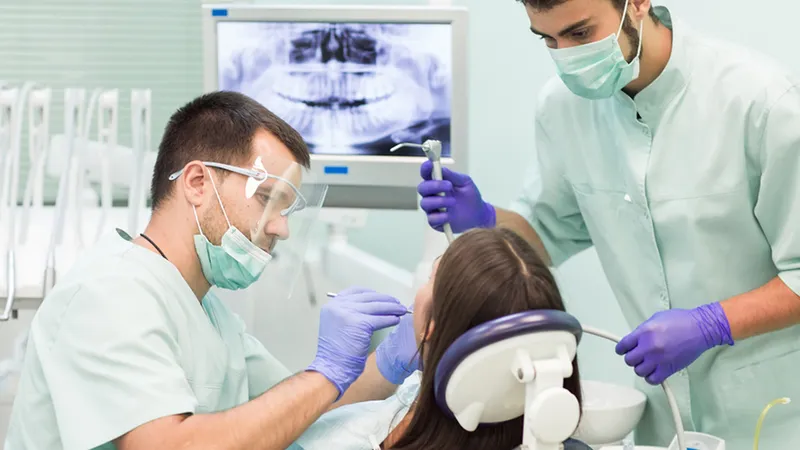
Successful autogenous bone grafting begins with detailed evaluation. At New York S Dental Clinic, assessment includes:
Clinical oral examination
Radiographic imaging and X-ray analysis
Evaluation of bone volume, density, and anatomical landmarks
Assessment of overall periodontal health
Active infection or uncontrolled gum disease must be addressed before proceeding. Precise diagnosis allows clinicians to:
Determine the amount of bone required
Select the appropriate donor site
Plan ideal implant positioning
Minimize surgical risks
Step-by-Step Autogenous Bone Graft Procedure
1. Treatment Planning
After confirming the need for bone augmentation, the donor and recipient sites are identified. The graft volume is carefully calculated.
2. Local Anesthesia
Precise anesthesia is administered to ensure patient comfort during the oral surgery procedure.
3. Bone Harvesting
A small amount of bone is gently collected from the selected donor site using minimally invasive techniques.
4. Graft Placement
The harvested bone is shaped and positioned at the deficient implant site. Protective membranes may be applied to stabilize the graft and support guided bone regeneration.
5. Healing Phase
Over several months, the graft integrates with native bone through natural bone remodeling processes.
6. Dental Implant Placement
Once adequate bone maturation is confirmed, the dental implant procedure can be safely performed.
Healing and Recovery After Bone Grafting
Healing after autogenous bone graft surgery varies depending on:
Graft size and location
Patient’s systemic health
Smoking habits
Quality of post-operative care
Most patients experience mild swelling or temporary discomfort. Proper medication and follow-up care help minimize complications.
Bone regeneration typically requires several months before implant placement. Allowing sufficient healing time is critical for achieving long-term implant stability.
Patients are advised to:
Maintain excellent oral hygiene
Avoid mechanical pressure on the surgical site
Attend scheduled evaluations
Avoid smoking during recovery
Safety and Clinical Considerations
Although autogenous bone grafting is well-established, it remains a surgical intervention. Potential risks include:
Temporary swelling or bruising
Mild discomfort at donor and graft sites
Infection (rare with proper care)
Partial graft resorption
Meticulous surgical technique and individualized planning significantly reduce these risks.
At New York S Dental Clinic, treatment is guided by:
Accurate diagnosis
Conservative surgical decision-making
Structured implant planning
Emphasis on preserving natural oral tissues
The Role of Periodontal Health in Bone Regeneration
Healthy gums are essential for successful bone regeneration. Active periodontal disease can compromise healing and increase the risk of implant failure.
Scaling and comprehensive gum treatment remove bacterial deposits that contribute to bone loss. Long-term implant success depends on maintaining stable surrounding tissues.
Long-Term Benefits of Autogenous Bone Grafting

By restoring lost jawbone, autogenous bone grafting provides:
Improved implant anchorage
Balanced occlusal force distribution
Enhanced aesthetic contour
Greater long-term functional stability
While no surgical procedure guarantees absolute success, biologically compatible grafting significantly improves predictability in complex implant cases.
Suitable Candidates for Autogenous Bone Grafting
Patients who may benefit from autograft bone reconstruction include:
Individuals with advanced alveolar bone resorption
Patients planning dental implant treatment
Trauma-related bone defect cases
Patients seeking long-term implant durability
Each case requires individualized evaluation to ensure safety and appropriateness.
Realistic Expectations and Patient Education
Autogenous Bone Grafting is a reconstructive procedure designed to restore structural integrity—not a cosmetic shortcut. Patients should understand:
Healing requires time
Multiple visits may be necessary
Temporary swelling is normal
Implant placement follows complete bone maturation
Clear communication and structured planning help ensure predictable outcomes and patient satisfaction.
Conclusion
Autogenous Bone Grafting in Jongno-gu, Seoul remains one of the most reliable methods for restoring deficient jawbone prior to dental implant placement. By using the patient’s own bone, this approach supports natural bone regeneration, biological integration, and long-term implant stability.
At New York S Dental Clinic, bone graft procedures are performed only after comprehensive diagnostic evaluation and careful case selection. The clinic’s approach emphasizes structured treatment planning, preservation of natural structures, and evidence-based care—ensuring that each implant restoration is supported by a stable and biologically sound foundation.