English-Speaking, U.S.-Trained Dental Care in Jongno-gu, Seoul | +82 2-735-2859
en-US
TMJ Treatment Seoul: English Dental Guide for Americans
Complete guide to TMJ treatment in Seoul at English-speaking New York S Dental Clinic. Expert dentists, transparent pricing, American patient support.

Introduction
If you've been dealing with jaw pain, clicking sounds when you chew, or tension headaches that won't go away, you're not alone—and you may have TMJ disorder. For Americans considering treatment options, Seoul has emerged as a leading destination for TMJ treatment, offering world class expertise at a fraction of U.S. costs, combined with English speaking care from internationally trained dentists. At New York S Dental Clinic in Jongno gu, Seoul, we specialize in helping American patients find relief and restored jaw function through advanced TMJ treatment.
Many Americans with TMJ disorder face a frustrating reality: treatment in the U.S. is expensive, often requiring multiple specialists, and prolonged waiting lists can delay care for months. Whether you're experiencing jaw pain, limited mouth opening, or the constant worry that your condition will worsen, the uncertainty about whether to pursue treatment and where to get it is isolating. The good news is that TMJ treatment in Seoul combines cutting edge diagnostic technology, proven clinical techniques, and dramatically lower costs without compromising quality.
By the end of this guide, you'll understand what TMJ disorder actually is and whether your symptoms match common presentations, how TMJ treatment differs in Seoul compared to the United States, the complete treatment process from initial consultation to recovery, real costs and what you can expect to save by choosing Seoul, how to coordinate with your U.S. dentist for ongoing care after treatment, and step by step logistics for planning your TMJ treatment trip to Korea.
Dr. MinJi Kim, our Clinic Director, completed advanced dental training in the United States and has over 10 years of experience diagnosing and treating TMJ disorders for both local Seoul patients and international visitors. With Dr. KyungJin Kim's specialized expertise in restorative and functional dentistry, our team has successfully restored jaw function and eliminated pain for hundreds of patients including dozens of Americans who return home with lasting results and strong recommendations for friends and family.
What Is TMJ Treatment and Why You Might Need It in Seoul
Understanding TMJ Disorder: The Basics
TMJ stands for temporomandibular joint, the hinge connecting your lower jaw to your skull. This joint is one of the most complex in your body, involving muscles, ligaments, and a delicate disc that allows smooth jaw movement. When something disrupts this system whether through misalignment, muscle tension, disc displacement, or trauma you develop TMJ disorder. Common symptoms include jaw pain, clicking or popping sounds, limited mouth opening, headaches, and neck tension. Unlike many dental problems that people can ignore for years, TMJ disorder often worsens without treatment because the joint continues to degrade and compensation patterns develop in surrounding muscles.
What makes TMJ treatment in Seoul particularly effective is that Korean dentists have developed specialized expertise in functional dentistry and bite correction skills that directly address the root cause of TMJ problems rather than just symptom management. This functional approach, combined with advanced diagnostic technology, makes Seoul an increasingly popular destination for Americans seeking definitive TMJ solutions.
Image 1: Temporomandibular joint anatomy diagram with labels showing joint structure, muscles, and disc positioning. Alt text: "Temporomandibular joint anatomy: jaw joint structure and function"
TMJ Symptoms: Do You Need Treatment?
Not every jaw noise means you have TMJ disorder, but certain patterns suggest you should seek professional evaluation. Red flags include persistent jaw pain or tenderness, clicking or popping that occurs regularly not just occasionally, limited mouth opening that interferes with eating, morning stiffness in the jaw, frequent tension headaches especially when concentrated, and radiating pain into the ear, neck, or shoulders.
Many Americans have lived with these symptoms for years sometimes decades believing they're just "how their jaw works." But TMJ disorder is progressive. Without treatment, the joint deteriorates further, muscles adapt often making things worse, and symptoms typically intensify. This is why early intervention matters. A TMJ disorder that seems manageable today can become severely limiting without professional intervention.
Why Seoul for TMJ Treatment?
Seoul has become a global hub for TMJ expertise for several reasons. First, Korean dental education emphasizes functional dentistry and occlusion science more heavily than many U.S. programs, creating dentists with deep expertise in TMJ mechanics. Second, Korean clinics invest heavily in diagnostic technology 3D CBCT scanning, digital bite analysis, and computer aided treatment planning are standard, not premium add ons. Third, the cost structure allows for comprehensive, multimodal treatment that would be financially prohibitive in the U.S.
But the real advantage is that Seoul dentists approach TMJ as a functional problem requiring precise engineering solutions not as a mysterious condition to "manage." This philosophy, combined with Dr. MinJi Kim's U.S. training and bilingual expertise, makes New York S Dental Clinic uniquely positioned to help American patients.
Doctor Quote:
"In my 10 plus years treating TMJ disorders, I've found that the difference between successful outcomes and ongoing problems often comes down to how we diagnose the root cause. In Seoul, we have access to technology and training that allows us to identify the precise structural or functional issue driving each patient's TMJ problem whether it's a disc displacement, occlusal misalignment, or muscle dysfunction. This precision means we can target treatment directly at the cause, not just mask symptoms." — Dr. MinJi Kim, DDS, Clinic Director, New York S Dental Clinic
TMJ Symptoms, Diagnosis, and When Treatment Is Necessary
Common TMJ Symptoms Explained
Let's break down the specific symptoms patients experience and what each one means.
Jaw clicking or popping typically indicates disc displacement, meaning the cartilage disc inside the joint is shifting out of optimal position. It's not automatically painful, but it suggests the joint is not functioning normally and will likely deteriorate without intervention. Pain or tenderness can originate from muscle tension, inflammation in the joint capsule, or bone on bone contact if cartilage has deteriorated. Location matters significantly pain in front of the ear suggests the joint itself is involved, while pain in the temple or side of face often indicates muscle tension. Limited mouth opening may indicate severe disc displacement, muscle guarding (protective muscle tension), or joint swelling. When opening is significantly limited, it affects chewing, speaking, and quality of life.
Headaches and ear pain occur because the TMJ is closely connected to the trigeminal nerve and surrounding muscles. TMJ dysfunction sends pain signals up into the temple, forehead, and sides of the head. The key insight: symptoms rarely exist in isolation, and the combination pattern tells a story about what's happening inside the joint. Many jaw pain relief patients report that once they understand which symptoms cluster together, they realize their problem is more serious than they initially thought.
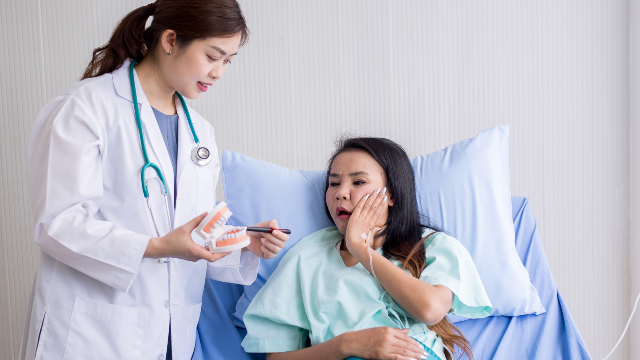
Image 2: Patient consultation photo showing clinical examination. Alt text: "TMJ assessment at New York S Dental Clinic in Seoul"
How We Diagnose TMJ Problems at New York S
Diagnosis at New York S Dental Clinic follows a systematic process designed to identify the exact nature of your TMJ problem. Step 1 involves clinical examination where we assess your range of motion, listen for joint sounds, palpate muscles and joints, and evaluate how your teeth come together (your bite or occlusion). Step 2 uses 3D imaging (CBCT) where unlike traditional 2D X rays, our CBCT scanner creates a three dimensional image of your jaw joint, showing the exact position of the disc, the shape of the bone, and any degenerative changes.
Step 3 is digital bite analysis where we use computer aided analysis to map your bite pattern and identify any misalignments that contribute to TMJ stress. Step 4 is treatment planning where based on all diagnostic data, we create a personalized treatment plan explaining what's causing your problem and exactly how we'll fix it. This comprehensive approach takes time usually 1–2 hours for a complete initial assessment but it's essential for accurate diagnosis and effective TMJ treatment.
Table 1: TMJ Diagnostic Methods Comparison
Diagnostic Method | What It Shows | Why We Use It |
|---|---|---|
Clinical examination | Muscle tension, range of motion, joint sounds | Quick screening; identifies obvious dysfunction |
3D CBCT scanning | Exact disc position, bone structure, degenerative changes | Reveals hidden problems; guides treatment planning |
Bite analysis | Occlusal contacts, misalignment patterns | Shows how bite contributes to TMJ stress |
Muscle palpation | Tension areas, trigger points | Identifies muscle based vs joint based problems |
Doctor Quote:
"Many patients come to us having been told 'your TMJ looks fine' by previous dentists yet they're still in pain. The reason is usually that they received only a basic clinical exam or outdated 2D X ray. With our 3D CBCT technology and detailed bite analysis, we often identify disc displacements or occlusal problems that weren't visible before. This is why Americans often travel to Seoul specifically for our diagnostic capabilities they want to know what's really happening in their jaw, not guess." — Dr. KyungJin Kim, DDS, Restorative Specialist, New York S Dental Clinic
When to Seek TMJ Treatment
You should seek professional TMJ evaluation if you experience persistent jaw pain or clicking that lasts more than two weeks, difficulty chewing or limited mouth opening that interferes with normal eating, frequent tension headaches especially upon waking, ear pain without an ear infection diagnosis, or neck or shoulder pain that correlates with jaw tension.
You do not necessarily need treatment if you have occasional jaw clicking with no pain, symptoms appeared after one incident and are resolving naturally, or you have mild morning stiffness that improves as you move your jaw. The critical distinction: symptoms that persist, worsen, or interfere with function warrant professional evaluation. Waiting typically makes things worse, not better, as the jaw joint dysfunction compounds over time.
TMJ Treatment Options: Conservative vs Advanced Approaches
Conservative TMJ Treatment Approaches
Before recommending any invasive procedure, ethical dentists start with conservative approaches that address muscle tension and jaw mechanics. Physical therapy and exercises involving specific jaw stretching and strengthening can reduce muscle tension and improve jaw function. These are most effective for muscle based TMJ problems as opposed to disc displacement or arthritis. Bite appliances (night guards) are custom fitted splints worn at night that reduce muscle tension and prevent grinding related damage. Effective for many patients, but they address symptoms rather than underlying problems.
Occlusal adjustment involves selectively adjusting tooth contact points to reduce stress on the joint. This is non invasive but requires precise analysis to be effective. Anti inflammatory medications like short term NSAIDs can reduce pain and inflammation while other treatments take effect. Stress management and ergonomics matter significantly since many TMJ problems are exacerbated by stress related muscle tension and poor posture. Addressing these can significantly improve outcomes.
When conservative approaches work well for functional problems caused primarily by muscle tension or minor bite misalignment, conservative approaches often resolve symptoms completely. Many patients experience 50–80% improvement within 2–3 months. When conservative falls short, if symptoms persist after 2–3 months of conservative treatment, or if diagnostic imaging shows significant disc displacement or structural damage, more definitive treatment becomes necessary. This is when jaw pain relief requires a more comprehensive approach.
Advanced TMJ Treatment: Seoul's Advantage
When conservative approaches don't resolve TMJ problems, advanced treatment becomes necessary. This is where Seoul dentistry offers significant advantages over typical U.S. approaches. The typical U.S. approach has many American dentists referring TMJ patients to oral surgeons for consideration of surgical procedures (arthrocentesis, arthroscopy, or full joint reconstruction). These are expensive ($15,000–$30,000 or more), carry surgical risks, and have mixed long term success rates. Before surgery, however, there is often a gap: no comprehensive functional approach to address occlusion, muscle dysfunction, and joint mechanics together.
The Seoul approach to advanced functional dentistry treats TMJ as an engineering problem. The treatment might include precision occlusal rehabilitation involving custom bite reconstruction that optimizes tooth contact to reduce joint stress. This is more sophisticated than simple adjustment it may involve new restorations, crowns, or veneers precisely designed to support optimal jaw mechanics. Advanced splint therapy uses long term use of a precisely engineered bite splint that holds the jaw in a therapeutic position, allowing the joint to heal and remodel. Combination therapy applies a multimodal approach combining physical therapy, bite appliances, occlusal refinement, and sometimes selective orthodontics (like Invisalign) to achieve optimal jaw alignment.
The advantage is clear: this approach addresses root causes and often resolves problems without surgery. Success rates are 85–95% for appropriately selected cases, with outcomes that last 10 plus years. Americans come to Seoul for advanced TMJ treatment because of the cost (only $4,000–$8,000 in Seoul versus $15,000–$30,000 for U.S. surgery), the non invasive approach that avoids surgical risks, and the expertise where Korean dentists specialize in this approach and it's standard care in Seoul but remains premium specialty in the U.S.
Table 2: TMJ Treatment Comparison: Conservative vs Advanced vs Surgical
Approach | Treatment Methods | Cost Range | Timeline | Success Rate | Invasiveness |
|---|---|---|---|---|---|
Conservative (U.S. & Seoul) | Physical therapy, bite guard, occlusal adjustment | $500–$2,000 | 2–3 months | 50–70% (muscle based cases) | Non invasive |
Advanced Functional (Seoul Specialty) | Occlusal rehabilitation, splint therapy, combination approach | $4,000–$8,000 | 3–6 months | 85–95% | Minimally invasive |
Surgical (U.S. Typical) | Arthrocentesis, arthroscopy, joint reconstruction | $15,000–$30,000+ | 6–12 months | 60–75% | Highly invasive |
Doctor Quote:
"The biggest misconception American patients have is that if conservative treatment doesn't work, surgery is the only option. In reality, advanced functional orthodontic and occlusal rehabilitation approaches can resolve 85–95% of TMJ problems without surgery. These are bread and butter treatments in Seoul but remain unknown to most U.S. dentists. It's remarkable how many American patients we see who were already told they'd need surgery and then they're completely pain free and functional after our treatment." — Dr. MinJi Kim, DDS, Clinic Director
The TMJ Treatment Procedure at New York S Dental Clinic: Step by Step
Initial Consultation and Treatment Planning
Your TMJ treatment journey at New York S Dental Clinic begins with a comprehensive consultation that establishes exactly what's causing your problem and how we'll fix it. On Day 1–2, your consultation includes an extended clinical examination lasting 45–60 minutes where you'll meet with Dr. MinJi Kim or Dr. KyungJin Kim in a private treatment room. We discuss your symptom history, triggers, and how TMJ dysfunction has affected your daily life. We perform detailed clinical tests: measuring your range of motion, listening to joint sounds with a stethoscope, palpating muscles and joint spaces, and analyzing your bite.
Next comes 3D CBCT imaging where you move to our imaging room for a CBCT scan, a quick 10 second scan that creates a 3D model of your jaw joint. Unlike traditional X rays that show limited detail, CBCT reveals the exact position of your disc, bone structure, and any degenerative changes. Digital bite analysis uses our computer bite analysis system to map exactly how your upper and lower teeth meet and where contact points create joint stress. Finally, your treatment plan consultation lasts 60–90 minutes where we review all findings with you, showing your imaging on our large display screen. You'll see exactly what's causing your problem. We then explain our recommended jaw joint treatment Korea plan in plain language, discuss timeline, cost, and answer all your questions. This is collaborative you understand every aspect before we proceed.
Why extended consultation matters: many U.S. clinics rush through this process. We spend 3–4 hours on consultation because precision diagnosis and patient understanding are foundational to successful TMJ treatment.
Image 3: Dr. MinJi Kim reviewing 3D CBCT images with patient. Alt text: "Digital bite analysis and CBCT imaging consultation at New York S Dental Clinic"
Treatment Execution and Recovery Begins
Once you and your doctor have agreed on a treatment plan, the actual treatment process begins. Depending on your specific diagnosis, treatment might include occlusal rehabilitation (if needed) where if your bite is contributing to TMJ stress, we create new contact points through selective adjustment, new restorations, or crowns. This is a precision process often requiring 1–3 appointments where we optimize how your teeth meet to minimize joint stress.
Custom bite splint fabrication creates a precisely engineered bite splint (different from a generic night guard) that holds your jaw in a therapeutic position. This splint reduces muscle tension by supporting optimal jaw positioning, protects joints from damaging forces, allows inflammation to resolve, and is typically worn for 2–4 weeks initially, then as needed long term. Advanced physical therapy protocol provides 2–3 sessions of specialized TMJ exercises and manual therapy techniques, teaching you exercises to continue at home.
Your timeline for full treatment includes initial consultation and imaging taking 2–3 hours, occlusal rehabilitation (if needed) spanning 1–3 appointments over 1–2 weeks, splint therapy initiation requiring 1–2 appointments, and physical therapy sessions numbering 2–3 in clinic sessions. Most patients complete treatment in a single 7–10 day trip. This bite correction Seoul approach means you don't have to make multiple trips or miss excessive work time.
Image 4: Custom bite splint (before/after or fitted on model). Alt text: "Custom therapeutic TMJ bite splint from New York S Dental Clinic Seoul"
Doctor Quote:
"What I appreciate about how we approach TMJ at New York S is that we're not trying to rush patients through treatment or sell them unnecessary procedures. We diagnose precisely, explain honestly, and then execute a plan that addresses the root cause. Often, the most important part of my job is saying 'We found the problem, here's exactly how we'll fix it, and here's why this will work' and then seeing the relief on patients' faces." — Dr. KyungJin Kim, DDS, Restorative Specialist
Recovery, Timeline, and Getting Back to Normal
Immediate Recovery: Days 1–7
The recovery experience after TMJ treatment varies based on which treatments you received, but generally follows a predictable pattern. During days 1–3 immediately after treatment, you may experience mild soreness in jaw muscles and joints similar to post workout muscle soreness. This is normal and indicates healing is beginning. Pain level is typically mild to moderate and managed with over the counter pain relief.
During this phase, your diet should consist of soft foods only (soups, yogurt, smoothies, mashed foods), and you should avoid hard, crunchy, or sticky foods. Activity should be restricted to rest and minimal jaw movement, and you should avoid talking extensively. Your bite splint should be worn as directed (usually all time initially, especially during sleep).
Days 4–7 bring early recovery where soreness begins to decrease. You'll notice improved mouth opening and reduced clicking or popping as inflammation reduces. Many patients report feeling notably better by day 5–6. During this period, continue soft foods but gradually introduce more textured foods as comfort improves. Activity can include gentle jaw exercises as taught by our physical therapist, and light activities are okay while strenuous exercise should be deferred. Continue wearing your bite splint as directed.
What's normal versus when to contact us: mild soreness, slight swelling, and stiffness improving daily are all normal. Contact us if you experience severe pain beyond normal soreness, increasing swelling, or difficulty breathing or swallowing.
Image 5: Recovery timeline infographic (Days 1–30). Alt text: "TMJ treatment recovery timeline: weeks 1–4 after procedure at New York S"
Ongoing Recovery: Weeks 2–8 and Beyond
Weeks 2–4 bring the active improvement phase where most patients see dramatic improvement. Clicking and popping often resolve completely. Pain typically decreases 70–80% from baseline. During this phase, most patients return to normal eating by week 3–4, though they may continue being mindful of very hard or sticky foods. Return to normal daily activities is appropriate, light exercise like walking or gentle yoga is acceptable by week 2, but you should avoid high impact exercise for four weeks. Continue your bite splint at night and may reduce daytime wear if directed. Continue home exercises and may return for one booster session.
Weeks 4–8 bring the integration phase where by week 4, most patients are functioning normally. Remaining symptoms continue to improve gradually. Your jaw is learning new movement patterns and the joint is remodeling positively. Diet becomes unrestricted (assuming no other dental work limiting you), activity allows full return to exercise and normal activities, your bite splint is typically used only at night or as needed, and follow up includes a virtual check in with Dr. MinJi Kim via video consultation from the U.S.
Long term management over months 2–12 shows that the majority of patients achieve 85–90% improvement by 8–12 weeks and remain stable long term. Ongoing management includes continued night time splint use (usually long term), home exercises 2–3 times weekly, awareness of stress related jaw clenching triggers, and follow up check ups typically annual or as needed.
Key timeline data shows pain reduction of 50% by week 1, 75% by week 2, and 90% or more by month 2. Functional improvement in chewing and mouth opening shows steady improvement weeks 1–4, then plateau. Resolution of clicking or popping reaches 70–80% by week 2, often 100% by week 4. Your jaw alignment treatment will show progressive improvement throughout this period with jaw pain relief continuing as inflammation reduces.
Table 3: TMJ Recovery Timeline: Week by Week
Timeline | Activity Restrictions | Diet Modifications | Bite Splint | Pain Level | Expected Symptoms |
|---|---|---|---|---|---|
Days 1–3 | Rest; minimal talking | Soft foods only | Full time wear | Moderate soreness | Mild swelling, stiffness |
Days 4–7 | Light movement; avoid strenuous activity | Soft foods; gradual texturing | Full time wear | Mild to moderate | Decreasing swelling, improved opening |
Week 2 | Normal daily activity; no high impact exercise | Most foods; avoid very hard items | Day and night | Mild | Continued improvement, reduced clicking |
Week 3–4 | Return to exercise | Normal diet | Night time primarily | Minimal | Marked improvement, mostly resolved |
Weeks 5–8 | Full normal activity | Unrestricted | As needed | Minimal | Stable, long term results emerging |
Months 2–12 | All activities | Unrestricted | Long term maintenance | None | Stable; prevention focused |
Doctor Quote:
"One thing I tell American patients is that TMJ recovery is not like an extraction where you're better in a week. It's more like physical rehabilitation gradual, steady improvement with periodic ups and downs. By week 2, most patients notice dramatic change. By week 4, they feel 80% better. And by month 3, they often can't remember what the pain felt like. The key is patience and consistent compliance with the recovery protocol." — Dr. MinJi Kim, DDS, Clinic Director
Cost and Pricing Transparency: Seoul vs the United States

Complete TMJ Treatment Cost Breakdown at New York S
Transparency is fundamental to our pricing philosophy. Here's exactly what TMJ treatment costs at New York S Dental Clinic, with no hidden fees.
Diagnostic Phase:
Initial consultation (2–3 hours): $200 3D CBCT imaging: $150 Digital bite analysis: $100 Treatment planning consultation: Included Subtotal: $450
Treatment Phase (varies by complexity):
Conservative Treatment (Physical therapy and bite guard):
Custom bite guard fabrication: $400 Physical therapy sessions (3–5): $200–$300 Occlusal adjustments (if needed): $0–$200 Subtotal: $600–$900
Advanced Functional Treatment (Occlusal rehabilitation, splint, and therapy):
Custom therapeutic splint (precision engineered): $600 Occlusal rehabilitation (crowns and restorations as needed): $1,500–$3,000 Physical therapy sessions (3–5): $200–$300 Follow up adjustments: $300–$500 Subtotal: $2,600–$4,300
Follow Up Phase (Over 6–12 months):
Virtual consultations with Dr. MinJi Kim (from the U.S.): $100 each (typically 2–3 needed) Optional in person adjustments on return visit: $0–$300 Subtotal: $200–$600
Total TMJ Treatment Cost Range at New York S: $1,250–$5,200
(Actual cost depends on your specific diagnosis and which treatments are needed; we provide exact quotes after initial assessment.)
What's Included: All diagnostic imaging and analysis, all treatment materials and procedures, physical therapy sessions, custom fabricated appliances, virtual follow up consultations, 24/7 email support, and guidance for coordinating with your U.S. dentist.
What's NOT Included: Flights and accommodation (your responsibility), meals and incidental expenses, airport transfers (we can arrange for a fee), and future cosmetic work (separate pricing).
Image 6: Cost breakdown infographic (pie chart showing diagnostic versus treatment versus follow up). Alt text: "Complete TMJ treatment cost breakdown at New York S Dental Clinic Seoul"
Seoul vs United States: The Real Savings
To understand your true savings, let's compare what the same TMJ treatment would cost in major U.S. cities using the scenario of advanced functional TMJ treatment (comprehensive approach).
Cost Component Comparison:
Cost Component | Seoul (New York S) | New York | Los Angeles | Houston |
|---|---|---|---|---|
Diagnostic Phase | $450 | $1,200–$1,500 | $1,000–$1,300 | $800–$1,000 |
Advanced Treatment (Splint and Occlusal Rehabilitation) | $2,600–$4,300 | $6,000–$10,000 | $5,500–$9,000 | $5,000–$8,000 |
Physical Therapy | $200–$300 | $500–$1,200 | $600–$1,400 | $400–$900 |
Follow Up (6–12 months) | $200–$600 | $800–$2,000 | $1,000–$2,500 | $600–$1,500 |
TOTAL TREATMENT | $3,450–$5,850 | $8,600–$14,700 | $8,100–$14,200 | $6,800–$11,400 |
Travel Costs to Consider:
Average Flight (NYC/LA/Houston to Seoul): $500–$1,000 Hotel (7 nights, mid range): $600–$1,000
Complete Trip Totals:
Location | Total Treatment Cost | Total Trip Cost | NET SAVINGS |
|---|---|---|---|
Seoul | $3,450–$5,850 | $4,650–$7,850 | — |
New York | $8,600–$14,700 | $9,200–$16,600 | $4,550–$8,750 |
Los Angeles | $8,100–$14,200 | $9,200–$15,800 | $4,550–$7,950 |
Houston | $6,800–$11,400 | $7,900–$13,400 | $3,250–$5,550 |
The real story is clear: even after accounting for flights and hotel, patients save $4,500–$8,000 on TMJ treatment by choosing Seoul. This represents a 50–60% savings compared to U.S. costs. This bite correction Seoul advantage is substantial and meaningful for most American patients.
Why Seoul Costs Less (It's Not Lower Quality):
Labor costs: dentist salaries in Seoul are lower than in New York or Los Angeles, but training and expertise are comparable. Overhead: rent in Jongno gu is significantly lower than Manhattan or Beverly Hills. Regulatory costs: Korean healthcare operates under a different cost structure. Materials: dental supplies are similarly priced globally, but Seoul's lower overhead reduces per patient costs. Insurance: we don't bill insurance (no administrative overhead), reducing per patient costs.
Critical point: lower cost does not mean lower quality. In fact, Seoul's ecosystem encourages comprehensive, high tech treatment because the lower costs make advanced diagnostics and treatment affordable for patients. U.S. clinics, facing higher overhead, sometimes limit treatment scope to keep costs manageable. With our TMJ treatment Seoul approach, you get maximum value and comprehensive care.
Why Choose New York S Dental Clinic for TMJ Treatment
Dr. MinJi Kim's Expertise and Experience
Dr. MinJi Kim, Clinic Director, brings a unique combination of international training and specialized TMJ expertise. Her experience spans 10 plus years in comprehensive dentistry and TMJ treatment, with international training from leading U.S. dental institutions. She has diagnosed and treated 500 plus TMJ cases including 100 plus American patients and pursues annual continuing education in advanced TMJ diagnosis and functional dentistry.
Her board certifications and credentials include a DDS from Seoul National University (top tier dental school), advanced certifications in TMJ disorders and occlusal rehabilitation, membership in the Korean Academy of Dental Medicine (functional dentistry specialty), and fluency in English from training and practice in the United States. Her unique qualifications include being a developer of a specialized TMJ diagnostic protocol combining CBCT imaging with functional testing, serving as a published speaker on TMJ treatment for international audiences, and mentoring younger dentists learning advanced TMJ techniques.
What sets Dr. MinJi Kim apart for American patients: unlike many Korean dentists who learned English as a second language, she has direct training experience in the United States and understands American patient expectations, healthcare literacy, and concerns. She can communicate complex TMJ mechanics in accessible English and has treated enough American patients to anticipate concerns and objections.
Patient perspective: "I chose Dr. MinJi Kim specifically because of her U.S. training. I knew she would understand my concerns about follow up care, insurance questions, and how to explain my treatment to my local dentist back home." — Rebecca C., New York
Image 7: Dr. MinJi Kim professional headshot or in treatment photo. Alt text: "Dr. MinJi Kim, DDS, TMJ specialist, New York S Dental Clinic Seoul"
This English speaking TMJ dentist in Korea brings the best of both worlds to American patients seeking TMJ treatment.
Advanced Technology and Treatment Methodology
New York S Dental Clinic is equipped with cutting edge diagnostic and treatment technology specifically selected for TMJ care. Our diagnostic technology includes a 3D CBCT scanner (Sirona/Carestream) that creates three dimensional images of your jaw joint with extreme precision, revealing disc position, bone structure, and degenerative changes invisible on traditional X rays. This technology is standard in advanced dental practices worldwide but still premium in many U.S. clinics. We also use a digital bite analysis system with computer aided analysis of your bite pattern, showing exactly where teeth contact and create stress on the TMJ. This helps us identify misalignments contributing to dysfunction. Our advanced visualization software provides treatment planning capabilities that show us and you the exact mechanics of your TMJ problem and how our treatment will address it.
Our treatment capabilities include precision occlusal rehabilitation with custom crown work and bite optimization, advanced splint fabrication with precision engineering, digital smile design integration (if cosmetic work is part of your plan), and coordination with orthodontists (Invisalign, if needed). Why this matters: these technologies allow us to diagnose precisely and plan treatment with engineering level accuracy. Many U.S. practices lack CBCT technology or lack the expertise to interpret it for TMJ cases. We combine technology with clinical expertise neither is sufficient alone.
Image 8: CBCT scanner or 3D imaging screen. Alt text: "3D CBCT imaging technology for advanced TMJ diagnosis at New York S Dental Clinic"
International Patient Support and Coordination
Managing TMJ treatment as an American patient requires coordinated support beyond clinical care. New York S provides comprehensive support before your trip, during treatment, and after you return home.
Before Your Trip:
Virtual consultations via Zoom or WhatsApp to discuss your case and confirm you're a good candidate Coordination of any preparatory work (if needed before arriving in Seoul) Travel planning guidance (flights, visa, accommodation) Detailed pre treatment instructions
During Treatment:
English only communication throughout (no translator needed) Dedicated patient coordinator managing your schedule and logistics Airport pickup service available 24/7 emergency contact number while you're in Seoul
After You Return Home:
Virtual follow up consultations with Dr. MinJi Kim at no additional charge Detailed written guidance for your U.S. dentist (explaining your treatment, recommendations for ongoing care) Ongoing email support for questions or concerns Optional return visit for check ups (discounted for follow up care)
Contact Information:
Languages spoken: English, Korean, Mandarin Hours: Monday–Friday 9:00 AM–7:00 PM (Seoul time); Saturday 9:00 AM–2:00 PM Emergency After Hours: Available via WhatsApp/phone (24/7)
We recognize that the dental clinic Jongno gu Seoul English speaking environment makes all the difference for international patients. Every staff member is committed to smooth, clear communication and comprehensive patient support.
Doctor Quote:
"The biggest challenge for international patients isn't the treatment itself it's the emotional work of managing a medical procedure far from home. We spend a lot of time making sure patients feel supported throughout the process. From the first consultation call to their follow up emails months later, we treat them like they're part of our community. That kind of attention to patient experience is just as important as technical skill." — Dr. MinJi Kim, DDS, Clinic Director
How to Book Your TMJ Treatment Consultation
Step 1: Schedule Your Virtual Consultation
Getting started with TMJ treatment at New York S is straightforward. Your first step is a free initial consultation where we discuss your case and determine if you're a good candidate.
What You Need to Do:
Contact New York S Dental Clinic via WhatsApp, email, or phone (details below) Provide brief information: your age, primary TMJ symptoms, how long you've had symptoms, and what treatments you've already tried Choose your consultation format: WhatsApp video call, Zoom, or phone (your preference) Confirm a time within 24–48 hours
What Happens During the Consultation:
Dr. MinJi Kim (or Dr. KyungJin Kim) will ask detailed questions about your symptoms and medical history (30–45 minutes) We'll discuss our initial assessment of your case We'll explain what a full diagnostic visit would entail We'll answer your questions about process, cost, and timeline If you're interested in proceeding, we'll schedule your in person diagnostic appointment and send you pre treatment instructions
Cost: completely free. No obligation to proceed.
What to Have Ready:
Any existing dental X rays or imaging (we can receive via email) List of medications you're currently taking Insurance documentation (if you want to explore coverage possibilities) Calendar access to discuss scheduling
Step 2: In Person Diagnostic Appointment
Once you've had your initial consultation and confirmed your interest in proceeding, you'll schedule your in person diagnostic appointment. This is where we get into the details.
Planning Your Trip:
Before you book flights: send us your preferred dates (typically a 7–10 day trip is ideal one day for diagnostic appointment, 1–3 days for treatment, remaining days for recovery and Seoul tourism). We'll confirm availability. We recommend arriving on day 1 or 2 of your trip. We can provide airport pickup service (optional, small fee).
For accommodation: we recommend hotels in or near Jongno gu (close to our clinic). We have partnerships with several mid range and upscale hotels and can provide recommendations based on your budget.
Your Diagnostic Visit:
Arrive at New York S Dental Clinic at your scheduled time Complete paperwork and medical history (15 minutes) Clinical examination and imaging with Dr. MinJi Kim or Dr. KyungJin Kim (3–4 hours total) Treatment planning consultation (included) Detailed quote and timeline for treatment
Following your diagnostic appointment: if you decide to proceed, treatment typically begins the next day or within 1–2 days. This efficiency means you complete your entire TMJ treatment trip without unnecessary delays.
Step 3: Contact Information and Getting Started
Phone: +82 2 722 0875
WhatsApp: Click Here
Email: info@nysdentalclinic.com
Website: https://www.nysdentalclinic.com
Location: Jongno-gu, Seoul, South Korea
Hours: The clinic operates from Monday and Tuesday between 10:00 AM and 7:00 PM, with extended hours on Wednesday until 8:00 PM. It remains closed on Thursday. On Friday, hours are from 10:00 AM to 6:00 PM, while weekend hours run from 9:30 AM to 1:30 PM on both Saturday and Sunday.
Frequently Asked Questions About TMJ Treatment in Seoul
What exactly is TMJ disorder and how common is it?
TMJ disorder is a dysfunction of the temporomandibular joint, the hinge connecting your lower jaw to your skull. It affects approximately 10–15% of the population (12–15 million Americans), making it a widespread condition. Common causes include misalignment of teeth (malocclusion), jaw trauma, stress related muscle tension, and disc displacement. The prevalence is higher in women than men, and it often develops gradually over years before symptoms become noticeable. If you're experiencing jaw pain or clicking, you're definitely not alone and it's very treatable.
I've Had Jaw Clicking For 10 Years With No Pain. Do I Need Treatment?
Not necessarily. Clicking without pain or functional limitations doesn't always require treatment. However, it typically indicates some degree of disc displacement or joint dysfunction. The key question: is it getting worse? Or interfering with chewing or function? If stable and asymptomatic, monitoring is reasonable. If you notice progression (increasing clicking, developing pain, limited opening), seek professional evaluation. Many people are surprised when they finally get diagnostics that their jaw clicking has been causing silent damage early intervention prevents this.
Can TMJ Problems Be Caused By Stress?
Absolutely. Stress related clenching and grinding (bruxism) is one of the most common TMJ triggers. When stressed, many people unconsciously clench their teeth or hold tension in their jaw muscles. Over time, this muscle tension can pull the jaw out of proper alignment, putting stress on the joint. If you notice you're clenching especially at night, on your commute, or during work stress, this is likely contributing to your TMJ dysfunction. Stress management combined with physical therapy and a bite guard can significantly reduce these symptoms.
Will I Need Multiple Trips To Seoul For TMJ Treatment, Or Can It Be Done In One Visit?
Most TMJ treatment can be completed in a single 7–10 day trip to Seoul. Your diagnostic appointment, treatment, and initial recovery all happen during one visit. However, some complex cases may benefit from a second trip 6–12 months later for advanced follow up (occlusal refinement, final splint adjustments). We discuss this honestly during your consultation. The majority of American patients complete everything they need in one comprehensive trip.
What Happens If My TMJ Problem Returns After I Go Back To The United States?
TMJ treatment results are typically very stable if you follow the recovery protocol and continue wearing your bite splint as directed. Recurrence is rare in appropriately treated cases. If symptoms do return, which is uncommon, you have several options: (1) virtual follow up with Dr. MinJi Kim (at no additional fee for consultation), (2) return to Seoul for in person check up, or (3) work with a compatible U.S. dentist we've connected you with. We provide detailed written guidance so your U.S. dentist can support your ongoing care.
How Do I Know If My U.S. Dentist Will Support Treatment Done In Seoul?
This is a valid concern, but most U.S. dentists are professional and supportive of patient care, even if received elsewhere. Before your trip to Seoul, we provide you with detailed written documentation of your diagnosis, treatment performed, and recommendations for ongoing care. This document is written for your U.S. dentist and explains everything in professional language they understand. We also provide our contact information in case your U.S. dentist wants to consult with us directly. In our experience, 95% or more of U.S. dentists are collaborative and supportive.
Can I Eat Normally Right After TMJ Treatment?
No diet is restricted for the first 2–3 weeks. Immediately after treatment, stick to soft foods: soups, yogurt, smoothies, mashed potatoes, scrambled eggs, etc. Avoid hard, crunchy, sticky, or chewy foods that stress the jaw. By week 2–3, as comfort improves, gradually introduce more textured foods. By week 4, most patients return to normal eating. We provide detailed diet guidelines that progress week by week. This temporary restriction is important for proper healing and protects the treatment area.
Will I Have To Wear A Bite Guard Forever?
Probably long term, but not necessarily forever. Most patients initially wear their custom therapeutic splint full time (day and night) for 2–4 weeks. Then they transition to night time wear. Many find they can eventually reduce to wearing the splint 2–4 nights per week or as needed when they notice jaw tension. Some prefer long term night time wear to prevent relapse. The bottom line: you'll likely wear the splint long term (years), but usually only at night. We discuss the specific long term protocol based on your individual case.
What's The Difference Between A Generic Night Guard And A Therapeutic Splint?
Significant difference exists between the two. A generic night guard (available at drugstores) is a one size fits most device that prevents grinding damage but often misaligns your bite slightly, sometimes making TMJ problems worse. A therapeutic splint, like what we create at New York S, is precisely engineered specifically for your jaw. It holds your jaw in a therapeutic position that reduces joint stress, allows inflammation to resolve, and trains better jaw mechanics. Cost difference: $50–$100 for generic versus $400–$600 for therapeutic. The therapeutic splint is an active treatment tool, not just protection.
Are There Natural Remedies Or Exercises I Can Do To Avoid Treatment?
Physical therapy and exercises are effective for mild, muscle based TMJ problems. Helpful approaches include: jaw stretching exercises, massage, heat therapy, stress management, ergonomic improvements, and avoiding habits like excessive chewing or jaw clenching. However, if your TMJ problem involves disc displacement, significant malocclusion, or inflammation (confirmed by imaging), exercises alone usually won't resolve it. Think of it this way: exercises help, but if your bite is misaligned or your disc is displaced, the structural problem remains despite physical therapy. Professional evaluation tells you what level of intervention you actually need.
Can I Get TMJ Treatment If I'm Also Getting Cosmetic Dental Work Done?
Absolutely. In fact, combining TMJ treatment with cosmetic dentistry (like veneers or whitening) is common. If your bite is being corrected for TMJ, your cosmetic work can be coordinated with that bite correction to ensure optimal results. We often do comprehensive smile makeovers that include both functional (TMJ focused) and aesthetic components. This is actually beneficial because everything is planned and executed together. Discuss this with Dr. MinJi Kim during your consultation if you're interested in combined treatment.
Is TMJ Treatment Covered By Dental Insurance?
Insurance coverage varies significantly. Some plans cover diagnostic costs (exams and X rays); fewer cover actual treatment. Coverage depends on whether TMJ is classified as "treatment of dysfunction" (covered) versus "cosmetic" (not covered). We recommend contacting your insurance before your Seoul trip to ask what they cover for TMJ treatment. If you're an American patient flying to Seoul specifically for TMJ care, most travel to a destination with lower costs partially because insurance doesn't cover it adequately in the U.S. We can help with insurance inquiry letters if needed, but plan on self funding most treatment.
How Is TMJ Treatment In Korea Different From Treatment In The United States?
The philosophy differs significantly. U.S. dentists often refer complex TMJ to oral surgeons for surgical options (arthrocentesis, arthroscopy). Korean dentists, especially in Seoul, approach TMJ through advanced functional dentistry comprehensive bite rehabilitation, precision splint therapy, and occlusal engineering. Surgery is a last resort in Korea, not an early option. The Seoul approach addresses root causes (misalignment, disc position, muscle dysfunction) through integrated functional treatment. This is why Americans often see better outcomes in Seoul the underlying problem is addressed, not just symptoms managed. Cost wise, functional treatment ($4,000–$8,000) is much less than surgical options ($15,000–$30,000 or more).
What If I'm A Dental Coward And Really Nervous About TMJ Treatment?
Many patients feel this way and we understand. Here's what we do to support anxious patients: (1) detailed explanation of every step before we do it; (2) sedation options available if desired (local anesthesia typically sufficient, but we can discuss deeper sedation); (3) we go slowly and check in frequently; (4) you can take breaks; (5) our English speaking team uses reassuring communication. We've treated hundreds of anxious patients successfully. By taking time for education and going at a comfortable pace, we've found almost all patients get through treatment well. Don't let fear stop you from getting help.
How Do I Decide Between Conservative TMJ Treatment And Advanced Treatment?
This is decided collaboratively during your diagnostic consultation. We never recommend advanced treatment unless conservative approaches have failed or imaging shows you need it. Here's the typical logic: (1) if your problem is primarily muscle based, we start conservative; (2) if you have confirmed disc displacement or significant malocclusion, advanced treatment is usually needed; (3) if conservative treatment is tried for 2–3 months with no improvement, we escalate to advanced options. Cost wise, conservative is less expensive but less likely to provide lasting resolution for structural problems. We discuss the pros and cons of each approach and you make the informed choice.
Conclusion
TMJ disorder is common, treatable, and dramatically improving in terms of outcomes when approached with advanced functional dentistry. If you've been experiencing jaw pain, clicking, limited opening, or tension headaches, you now understand that Seoul offers a compelling combination: world class expertise from internationally trained dentists, cutting edge diagnostic technology (3D CBCT, digital bite analysis), comprehensive functional treatment approaches that address root causes, and 50–60% cost savings compared to U.S. treatment all while experiencing one of the world's most vibrant and welcoming cities. New York S Dental Clinic specializes in serving American patients like you, with English speaking doctors, transparent pricing, and ongoing virtual support after you return home.
Dr. MinJi Kim and Dr. KyungJin Kim have successfully diagnosed and treated TMJ disorder in hundreds of patients, including dozens of Americans who've experienced life changing relief. The advanced diagnostic approach, precision treatment methodology, and commitment to patient education mean you're getting not just technical expertise, but genuine partnership in your recovery. Your TMJ treatment Seoul journey is not just about fixing a dental problem; it's about reclaiming your quality of life, eliminating pain, and returning home with lasting results and the confidence that comes from expert care.
About the Author:
Dr. MinJi Kim, DDS
Clinic Director, New York S Dental Clinic, Seoul, Korea
Dr. MinJi Kim brings over 10 years of experience in comprehensive dentistry and TMJ treatment to every patient case. She earned her DDS from Seoul National University, a top tier dental school in Korea, and completed advanced training in TMJ disorders and functional dentistry from U.S. institutions. Her extensive background includes 500 plus TMJ cases diagnosed and treated, with 100 plus American patients successfully helped through our clinic.
As a member of the Korean Academy of Dental Medicine specializing in functional dentistry, Dr. Kim maintains cutting edge expertise in advanced TMJ diagnosis and treatment. She is fluent in English and brings direct training experience from the United States, allowing her to understand American patient expectations and concerns uniquely well. Her role as developer of New York S Dental Clinic's specialized TMJ diagnostic protocol combining CBCT imaging with functional testing demonstrates her commitment to precision and excellence. She regularly serves as a published speaker on TMJ treatment for international audiences and mentors younger dentists in advanced TMJ techniques.
For consultations: WhatsApp [[Click Here] | Email [info@nysdentalclinic.com] Website: | https://www.nysdentalclinic.com