English-Speaking, U.S.-Trained Dental Care in Jongno-gu, Seoul | +82 2-735-2859
en-US
Is Dental Tourism Korea Worth the Cost? Real ROI Guide
Wondering if dental tourism Korea is worth the cost? See real implant savings, flight and hotel costs, and what Americans actually save at New York S Dental Clinic Seoul.

Introduction
Your Houston dentist just quoted you $9,500 for two dental implants. Your dental insurance will cover $1,500 — leaving $8,000 out of pocket. Before you put it on a payment plan you will be paying off for three years, there is a number you need to see.
Millions of working Americans are priced out of basic dental restoration every year — not because the procedures are rare or complex, but because the US dental system is built around profit margins that working families cannot sustain. Paul Gutierrez, a Houston contractor, faced exactly this situation. So did thousands of Americans who eventually asked the same question: is dental tourism Korea worth the cost?
By the end of this guide, you will know:
The exact net savings Americans achieve on dental implants in Seoul vs the US
What the full Seoul trip costs — flights, hotel, food, and time off work — honestly calculated
What variables can change the ROI bone grafts, multiple implants, work schedule
Whether New York S Dental Clinic is the right choice for your specific case
How to make the decision confidently without guessing
Is Dental Tourism Korea Worth the Cost? The Direct Answer
Yes — for most Americans needing dental implants, the net savings from dental tourism South Korea range from $3,000 to $6,000 after all travel costs are factored in.
The key word is "net." Gross dental savings — the difference between what you pay at a US dentist and what you pay at a Seoul clinic — can reach $7,400 on two implants. Net savings are what remains after you subtract your flight, hotel, food, and any lost work income.
Here is a one-line view of the numbers:
Cost | |
|---|---|
US implant cost (2 implants, Houston) | $9,000–$11,000 |
Seoul implant cost (2 implants) | $2,400–$3,600 |
Total Seoul trip overhead (flight, hotel, food) | $1,400–$2,430 |
Net saving | $2,970–$4,970 |
The ROI depends on three things: how many implants you need, whether a bone graft is required, and what your home city flight to Seoul costs. Here is exactly how that number breaks down.
The Real Numbers — What Americans Actually Save on Dental Implants in Seoul
Dental Tourism Korea Cost Savings for Americans: What the Numbers Show
The cost gap between the US and Seoul is not marginal. It is structural. American dental implant pricing reflects malpractice insurance, facility overhead, and a billing system built around insurance reimbursement — none of which apply the same way in South Korea.
Here is what dental tourism Korea cost savings for Americans look like in practice:
Procedure | US Cost (Houston) | Seoul Cost | Saving |
|---|---|---|---|
Single dental implant | $4,500–$5,500 | $1,200–$1,800 | $2,700–$3,700 |
Two dental implants | $9,000–$11,000 | $2,400–$3,600 | $5,400–$7,400 |
Bone graft (if needed) | $2,000–$3,000 | $500–$900 | $1,100–$2,100 |
Dental crown (per tooth) | $1,500–$2,500 | $400–$700 | $1,100–$1,800 |
These are general Seoul market figures. Pricing at New York S Dental Clinic is confirmed during a free virtual consultation, where Dr. KyungJin Kim reviews your specific case and provides an itemized cost estimate before you book any flights.
For context on dental implants cost Seoul vs USA: even the high end of Seoul pricing rarely approaches the low end of Houston pricing. That gap exists regardless of whether dental insurance does not cover implants — which, for most Americans, it does not.
If you want to explore the full cost comparison in more detail, see our related article on dental implants Seoul vs Houston cost.
Dental Tourism Seoul Total Budget for Americans: Full Cost Breakdown
The honest ROI calculation includes every dollar you spend — not just the dental bill. Here is the dental tourism Seoul total budget for Americans, built around a Houston departure:
Trip Cost Item | Low Estimate | High Estimate |
|---|---|---|
Round-trip flight (Houston to Seoul) | $700 | $1,100 |
Hotel (7 nights, Jongno-gu) | $420 | $840 |
Food and local transport | $280 | $490 |
Total Trip Overhead | $1,400 | $2,430 |
Dental saving (2 implants) | $5,400 | $7,400 |
Net Saving | $2,970 | $4,970 |
Flights Houston to Seoul on economy class, booked 6 to 8 weeks ahead, typically run $700 to $1,100 round trip. Hotel in Jongno-gu — the central Seoul district where New York S Dental Clinic is located — costs $60 to $120 per night. A 7-night stay lands at $420 to $840.
Food and transport in Seoul are significantly cheaper than in US cities. Budget $40 to $70 per day for meals and subway travel, which totals $280 to $490 for a week.
For a full itinerary breakdown by day, see how many days in Seoul for dental implants.
The dental tourism Seoul total budget for Americans, when calculated honestly, still produces a meaningful net saving — even at the high end of every estimate.
Affordable Dental Implants Seoul: How Quality Compares to the US
One of the most common questions Paul-type patients ask: if Seoul is so much cheaper, what are they cutting corners on?
The answer is nothing clinical.
Affordable dental implants Seoul are less expensive because of labor economics and clinic overhead — not because of lower material standards or reduced clinical expertise. South Korea's cost of living is significantly lower than the US, which means dentists, assistants, and facilities all operate at lower overhead. That saving is passed directly to the patient.
The implant systems used at New York S Dental Clinic include Osstem implants — a Korean-manufactured brand used in clinics across the United States and Europe — as well as other internationally certified systems. These are not budget alternatives. They are the same hardware.
South Korea's dental regulatory framework meets and in many areas exceeds international standards. The dental implant success rate in Korea for internationally certified implant systems is consistent with global figures of 95 to 98 percent.
Important Considerations That Affect Your ROI
If You Need a Bone Graft — How It Changes the Numbers
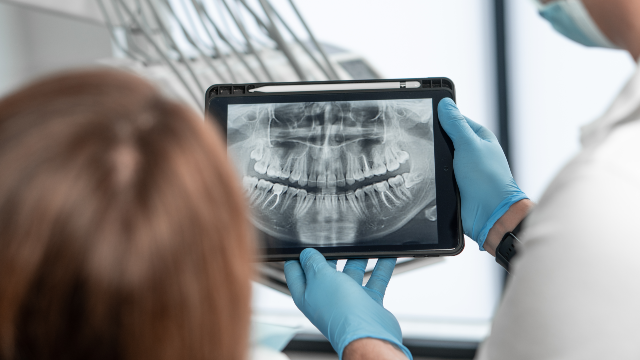
A bone graft is needed when a tooth has been missing for two or more years and the surrounding bone has resorbed. It is a common part of the implant process — and it changes both your cost and your timeline.
Here is the good news: bone grafts in Seoul are still dramatically cheaper than in the US.
Procedure | US Cost | Seoul Cost | Saving |
|---|---|---|---|
Bone graft | $2,000–$3,000 | $500–$900 | $1,100–$2,100 |
A bone graft adds 3 to 6 months to the full implant timeline because the grafted bone needs time to integrate before an implant can be placed. This does not require you to stay in Seoul for 6 months. The graft and the implant placement can be done on separate trips.
For patients like Paul — missing teeth for 3 years — a bone graft assessment is a necessary first step before any financial planning. New York S Dental Clinic offers a pre-travel CBCT review so you know before you book flights whether a graft is needed and what your full treatment plan looks like.
The Work Schedule Factor: Adding Lost Income to Your ROI
For self-employed Americans and contractors, time away from work is a real financial cost that belongs in any honest ROI calculation.
A 7-day Seoul trip for a contractor earning $300 per day equals $2,100 in lost income. Even with that factored in, here is where the numbers land:
Scenario | Net Saving |
|---|---|
Net saving on 2 implants after trip costs | $2,970–$4,970 |
Minus lost income ($300/day x 7 days) | ($2,100) |
Final net saving | $870–$2,870 |
That is still a positive outcome — and the ROI improves significantly with each additional implant. Every implant beyond the first adds $2,700 to $3,700 in net savings without meaningfully increasing trip overhead. For patients needing three or four implants, the case becomes much stronger.
If you want to understand [how many days in Seoul for dental implants] and how to minimize time off work, New York S Dental Clinic structures treatment schedules specifically for international patients.
What If Something Goes Wrong?
This is often the question a skeptical spouse is asking while Paul does his research. It deserves a direct answer.
The dental implant success rate globally is 95 to 98 percent. New York S Dental Clinic tracks outcomes for all international patients and maintains a virtual follow-up protocol after surgery.
Post-treatment check-ins happen via WhatsApp or video call at 2 weeks, 6 weeks, and 3 months after the procedure. For the osseointegration check — the 3 to 6 month appointment that confirms the implant has fused properly with the bone — New York S Dental Clinic coordinates with the patient's local Houston dentist so you do not need to return to Seoul for routine monitoring.
In the rare event of implant complications, the clinic has a clear policy and communication process. You are not on your own once you board the return flight.
Expert Recommendations — What Dr. KyungJin Kim Tells American Implant Patients
Who Gets the Best ROI from Dental Tourism in Korea
Not every patient gets the same return from a Seoul dental trip. Here is how Dr. KyungJin Kim frames patient candidacy at New York S Dental Clinic:
Patient Profile | ROI Level | Recommended Action |
|---|---|---|
2+ implants, no or minimal insurance | Strong positive ROI | Book virtual consultation now |
Single implant + bone graft, partial insurance | Moderate ROI | Consult to confirm total cost |
Single implant, no bone graft, high-cost flight city | Lower ROI — borderline | Consult to run your city-specific numbers |
3+ implants, no insurance | Strongest ROI | High priority for Seoul trip |
Best ROI candidates are patients needing two or more implants, patients with no or limited dental insurance, and patients whose total trip budget falls within the $5,000 to $7,000 range.
The single most important first step Dr. KyungJin Kim recommends before any financial planning is a free virtual consultation — 30 minutes, no obligation, and you leave with your specific treatment plan and itemized cost.
Why New York S Dental Clinic for American Implant Patients
New York S Dental Clinic in Jongno-gu, Seoul was built specifically to serve international patients — and the clinical team reflects that.
Dr. KyungJin Kim holds advanced degrees in restorative and general dentistry, has over 10 years of experience, and performs 400+ procedures annually. His focus is dental implants, restorative dentistry, and long-term oral health outcomes for patients who need clear answers and reliable results.
Dr. MinJi Kim is the clinic director — internationally trained in both the United States and South Korea, with over 10 years of experience in aesthetic dentistry, implants, and comprehensive oral care. This is a Seoul dental clinic for Americans that operates with American communication standards.
The entire team communicates in English across consultation, treatment planning, and aftercare. An international patient coordinator helps with scheduling, travel timing, and US dentist coordination. WhatsApp communication is available for all pre and post-treatment questions across time zones.
Related Questions American Patients Ask About Dental Tourism Korea ROI
Is Dental Tourism in Korea Cheaper Than Mexico or Thailand for Americans?
Seoul is competitively priced with Mexico and Thailand for implant procedures. The key differentiator is infrastructure: South Korea's regulatory standards, dental technology, and English-speaking specialist availability are consistently rated among the highest in Asia. For Americans on the West Coast, Seoul flights are often comparable in cost to Cancun or Bangkok — and the clinical environment is not a trade-off.
Can I Really Get Dental Implants Done in One Week in Seoul?
For single-stage implants, placement and a temporary crown can often be completed within 5 to 7 days. Full osseointegration — the process by which the implant fuses with the jawbone — takes 3 to 6 months regardless of where the procedure is done. The permanent crown can be fitted on a return trip or coordinated with your local US dentist. New York S Dental Clinic provides a specific day-by-day itinerary after your virtual consultation so you can plan your schedule accurately.
Is Dental Tourism to Seoul Safe for a First-Time International Traveler?
Americans do not need a visa for short stays in South Korea (check current K-ETA requirements before departure, as these may be updated). Jongno-gu is one of Seoul's most central and accessible districts, with English signage widely available throughout the area. New York S Dental Clinic provides pre-arrival logistics guidance to all international patients — including recommended hotels, transport routes, and what to expect on arrival.
What Is the Minimum Number of Implants That Makes Seoul Worth the Trip?
As a rule of thumb: one implant with no bone graft produces borderline ROI depending on your home city's flight cost to Seoul. Two or more implants produce a clear positive ROI for the vast majority of US cities. If you are unsure where your case falls, New York S Dental Clinic's free virtual consultation includes a personalized ROI assessment based on your specific treatment needs and departure city.
Contact Information
Phone: +82 2 722 0875
WhatsApp: Click Here
Email: info@nysdentalclinic.com
Website: https://www.nysdentalclinic.com
Location: Jongno-gu, Seoul, South Korea
Hours: The clinic operates from Monday and Tuesday between 10:00 AM and 7:00 PM, with extended hours on Wednesday until 8:00 PM. It remains closed on Thursday. On Friday, hours are from 10:00 AM to 6:00 PM, while weekend hours run from 9:30 AM to 1:30 PM on both Saturday and Sunday.
Conclusion
Is dental tourism Korea worth the cost? For most Americans needing two or more dental implants, the answer is yes — with net savings of $2,970 to $4,970 after every travel cost is accounted for. The two variables that most affect your individual ROI are whether you need a bone graft and what your work schedule looks like during the trip.
Dr. KyungJin Kim and Dr. MinJi Kim lead an English-speaking, internationally trained team at New York S Dental Clinic that was purpose-built for American patients. New York S Dental Clinic has treated hundreds of international patients from the United States with a clinical process and communication structure designed specifically for people navigating dental care from abroad.
If you are asking whether dental tourism Korea is worth the cost, the most useful next step is a free virtual consultation with Dr. KyungJin Kim — 30 minutes, no obligation, and you will leave knowing your exact treatment plan, total cost, and realistic timeline. Book a free virtual consultation with New York S Dental Clinic today.
About the Authors
Dr. KyungJin Kim, Dental Specialist Dental Specialist, New York S Dental Clinic, Jongno-gu, Seoul. 10+ years experience in restorative and general dentistry. 400+ procedures performed annually (clinic-wide). Specialist in dental implants, restorative dentistry, and long-term oral health. Experienced in treating international patients from the United States.
Dr. MinJi Kim, Clinic Director Clinic Director, New York S Dental Clinic, Jongno-gu, Seoul. Internationally trained — United States and South Korea. 10+ years experience in aesthetic dentistry, implants, and comprehensive oral care. Specializes in natural-result aesthetic dentistry and preserving natural teeth.
For consultations: WhatsApp [Click Here] | Email [info@nysdentalclinic.com] Website: | https://www.nysdentalclinic.com
FAQ
How Do I Get a Cost Estimate Before Flying to Seoul?
New York S Dental Clinic offers a free virtual consultation where Dr. KyungJin Kim reviews your dental history and imaging to provide an itemized treatment plan and cost estimate. This step is specifically designed to answer the ROI question before you book any travel. Affordable dental implants Seoul pricing is not a mystery — the clinic provides exact figures upfront.
How Long After My Implants Can I Return to Work?
Most patients return to desk work within 2 to 3 days of implant placement. Physical labor or high-activity work may require 5 to 7 days of recovery. For dental tourism Korea cost savings Americans who are self-employed or contractors, planning a 7-day trip allows for both the procedure and adequate initial recovery before returning home. Your specific recovery timeline will be discussed in detail during pre-treatment planning.
Is Dental Tourism Korea Worth It for Just One Implant?
Whether dental tourism Korea is worth the cost for a single implant depends on your specific situation. If no bone graft is needed and your round-trip flight is under $900, the ROI can still be positive. For patients needing one implant plus a bone graft, the savings are clearer. A free virtual consultation with Dr. KyungJin Kim is the best way to calculate your personal ROI before committing.
How Much Does Dental Tourism to Korea Cost in Total for Americans?
The dental tourism Seoul total budget for Americans — including flights from Houston, 7 nights of hotel in Jongno-gu, and food and local transport — typically runs $1,400 to $2,430. When combined with Seoul implant costs of $2,400 to $3,600 for two implants, your total out-of-pocket spend is roughly $3,800 to $6,030 compared to $9,000 to $11,000 in the US.
What Implant Brands Does New York S Dental Clinic Use?
New York S Dental Clinic uses internationally certified implant systems including Osstem — a Korean-manufactured brand used in leading clinics across the US and Europe. The dental implant success rate in Korea for these systems is consistent with the global benchmark of 95 to 98 percent. Specific implant brands used in your case are confirmed during the consultation.
Does New York S Dental Clinic Offer Financing or Payment Plans?
New York S Dental Clinic Seoul accommodates international patients with transparent pricing and clear payment processes. Specific financing options, deposit requirements, and payment structures are discussed during the virtual consultation. Contact the clinic directly via WhatsApp or the website form to ask about your options before scheduling.