English-Speaking, U.S.-Trained Dental Care in Jongno-gu, Seoul | +82 2-735-2859
en-US
Dental Implants in South Korea: Cost, Safety & Results 2026
Get dental implants in South Korea at 50% savings. US-trained dentist, 95%+ success rate, 7-day timeline. Free consultation for American patients from Houston, NYC, LA.
Introduction
You've been avoiding it for three years. The missing tooth on your lower left has become more than a cosmetic problem. Chewing hurts, your adjacent teeth are shifting, and bone loss is quietly progressing beneath the surface. Your Houston dentist quoted you $9,500 for two dental implants in South Korea's most advanced clinics. Then your cousin mentioned that his coworker flew to Seoul for the same procedure and paid less than half that price. You filed it away as too risky, too far, too complicated. But what if it wasn't?
Millions of American adults live with missing teeth because dental implants in the United States are financially inaccessible. Even with insurance, out-of-pocket costs for implants run $4,500 to $6,500 per tooth, placing them out of reach for working Americans. The frustration is compounded by the knowledge that the exact same procedure, performed by identically trained dentists using identical materials, costs 50 to 60 percent less halfway around the world.
By the end of this guide, you'll understand what dental implants actually are and how they compare to other tooth replacement options, why South Korea has become a tier-one destination for implant surgery with quality and safety on par with the US, the complete step-by-step implant process from initial consultation through final crown, realistic recovery timelines and what to expect when you return to work in Houston, transparent pricing comparisons showing exactly how much you'll save including flights and accommodation, safety protocols and implant warranties addressing every concern a cautious American patient has, how to coordinate follow-up care with your local Houston dentist after you return home, and the exact steps to book your consultation and start the process today.
As a board-certified dentist with over ten years of experience and more than 400 implant surgeries performed annually, Dr. KyungJin Kim specializes in restorative dentistry and provides precisely the same implant techniques and materials that American dentists use but at a cost structure that makes implants financially viable for working families. At New York S Dental Clinic in Seoul, we've helped hundreds of American patients from Houston, New York, Los Angeles, and across the country restore their smiles and their confidence.
What Are Dental Implants in South Korea and How Do They Work?
Understanding Dental Implants: The Basics
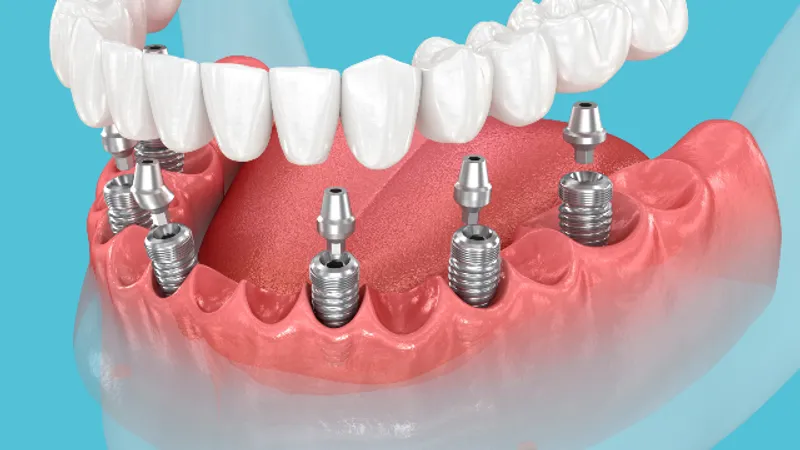
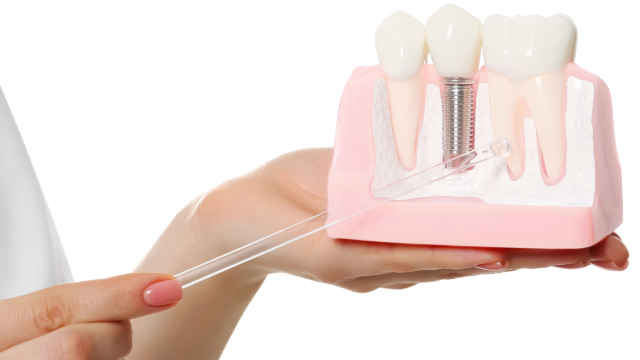
Dental implants are titanium posts surgically placed into the jawbone to replace missing tooth roots. The structure consists of three components: the implant itself (a metal post that serves as the artificial root), an abutment (a connector piece that attaches to the implant), and a crown (the visible replacement tooth that looks and functions like a natural tooth). Dental implants work because titanium integrates with bone through a process called osseointegration, creating a permanent foundation that feels as stable as a natural tooth root. With proper care, dental implants in South Korea last 20 to 30 or more years, often serving as a lifetime solution for missing teeth.
South Korean Implant Materials: Are They the Same as US Implants?
The implant brands used globally include Osstem (South Korea's number-one brand and FDA-approved), Implantium, Straumann, and Nobel Biocare. South Korean implants meet ISO 5832-3 and FDA equivalency standards, meaning they're held to the same rigorous quality specifications as American implants. Korean manufacturers often exceed international standards, and many US dentists use the exact same Osstem implants that we use at our clinic. The misconception that circulates among American patients is that Korean implants are cheaper knock-offs, but they're actually identical materials at lower cost due to labor and overhead differences, not quality cuts. South Korea's dental tourism market generates more than $2 billion annually specifically because quality is equal to or superior to US standards.
"The implants we use at New York S Dental Clinic are the same brands and materials that your American dentist would use," says Dr. KyungJin Kim. "We buy from the same manufacturers, follow the same surgical protocols, and achieve the same success rates. The difference is our overhead structure, not our quality. I've trained in both the United States and South Korea, and I can tell you with complete confidence: the implant surgery you'll receive here is equal to or better than what you'd get in Houston."
Implants vs Alternatives: Why Implants Win
Dental implants outperform other tooth replacement options in nearly every category. Implants versus dentures shows that implants are permanent and preserve jawbone, feel and function like natural teeth, while dentures require ongoing adjustment and accelerate bone loss. Implants versus bridges demonstrates that implants don't require grinding down adjacent healthy teeth, whereas bridges damage neighboring teeth and typically fail within 10 to 15 years. Implants are more expensive upfront but cost-effective long-term because they last two to three times longer than alternatives. For someone in your situation who has had missing teeth for three years with ongoing bone loss, dental implants in South Korea represent the only solution that truly restores both function and prevents future jawbone deterioration. A bridge would sacrifice healthy teeth, dentures would limit quality of life, but implants restore what you've lost completely.
Why Americans Are Choosing South Korea for Dental Implants
The Cost Reality: Why South Korea Is 50 to 60 Percent Cheaper
The structural cost differences between South Korea and the United States are significant but entirely legitimate. Labor costs in South Korea are 40 to 50 percent lower than the USA, clinic overhead including rent, utilities, and staff is 30 to 40 percent lower, and there are no expensive US malpractice insurance premiums that factor into every procedure. What stays the same is the materials cost because titanium is titanium, the surgical protocol is identical, and doctor training is equivalent or often superior because many Korean dentists train in the United States. The persistent myth that cheaper work means lower quality is false. Korean implants have 95 percent or higher success rates identical to US implants. The savings come from efficiency and lower overhead, not corner-cutting on materials or technique.
A real example illustrates this clearly: a Houston dentist charges $5,500 per implant. That same implant placed by Dr. KyungJin Kim costs $2,200. The $3,300 difference isn't quality loss; it's overhead structure and operational efficiency.
Cost Component | Houston Dentist | Seoul Implant | Savings |
|---|---|---|---|
Implant placement | $5,500 | $2,200 | $3,300 |
Crown | $1,500 | $800 | $700 |
Total per tooth | $7,000 | $3,000 | $4,000 (57% savings) |
For 2 teeth | $14,000 | $6,000 | $8,000 |
The Total Trip Cost Calculation: Is It Really Savings After Travel?
Many patients worry that when you add flights and hotel, the savings disappear. Let's calculate the actual numbers. A flight from Houston to Seoul costs $800 to $1,200 round-trip. Hotel accommodations for 7 nights near Jongno-gu run $600 to $1,000. Meals cost approximately $300 because Korean food is inexpensive. Local transportation totals about $50. Your total trip cost comes to $1,750 to $2,250. Your net savings on two dental implants in South Korea is $8,000 for the procedure minus $2,000 for the trip, which equals $6,000 net savings. You save six thousand dollars and get to see Seoul. This is not a compromise; it's a win-win.
"I've had hundreds of conversations with American patients who were shocked to discover they'd save $5,000 to $8,000 even after factoring in flights and hotel," Dr. KyungJin Kim explains. "What surprises them more is realizing that their delay in getting treatment was actually costing them more. Bone loss progresses. Adjacent teeth shift. A simple two-implant case becomes a complex four-implant case. The cost of waiting is higher than the cost of acting now. That's the real financial equation."
The Dental Implant Surgery Process in South Korea: Step-by-Step
Pre-Surgery: Consultation, Imaging, and Planning
Your journey begins with a virtual consultation that can happen before you travel or on your first day in Seoul. Advanced CBCT 3D cone beam CT scanning provides imaging that shows bone density, nerve location, and sinus position. This advanced imaging is essential for implant placement safety and precision. During this assessment, Dr. KyungJin Kim evaluates whether you need a bone graft. If bone loss is significant, a bone graft may be recommended, which adds four to six months to your timeline, or she assesses whether direct implant placement is viable. Using three-dimensional imaging technology, the exact implant position, angle, and depth are pre-planned for maximum precision before surgery ever begins. In your specific case with three years of bone loss, pre-assessment will confirm whether a bone graft is necessary for one or both teeth. Most likely, one or both sites will require bone grafting to ensure long-term implant stability and success.
Surgery Day: The Implant Placement Procedure
The surgical day itself follows a straightforward protocol. Local anesthetic is administered, with optional sedation available for patient comfort. A small incision in the gum tissue exposes the jawbone. Bone preparation involves drilling a precise hole in the jawbone at exactly the angle and depth planned beforehand. The titanium implant is then threaded into the jawbone at the exact position calculated during planning. The gum is sutured closed, and your implant is now in place but still integrating with bone. The entire procedure takes 45 to 60 minutes per implant, so your two implants would take one and a half to two hours total. Here's what's important to know: you feel zero pain during the procedure because the anesthetic ensures complete numbness. You'll experience only mild pressure and a vibration sensation, which is completely normal and expected.
"The surgery itself is the least concerning part of the implant process," says Dr. KyungJin Kim. "With modern anesthesia and precision planning, patients feel nothing during the procedure. What I tell patients like you is: you'll hear a drill which sounds dramatic, feel pressure but no pain, and in two hours, your implants are in place. The real work happens in the weeks that follow, as the bone integrates with the titanium. That's when patience becomes more important than anything else."
Post-Surgery: Integration and Temporary Solution
Following surgery, your body begins osseointegration, the process where bone integrates with the implant. This integration timeline spans three to six months and varies by implant location and bone quality. During this period, you wear a temporary partial denture or bridge to maintain function and appearance. This temporary solution allows you to chew, speak, and smile normally while the permanent fusion occurs beneath the surface. Osseointegration is non-negotiable. Placing a crown before osseointegration is complete leads to implant failure. This waiting period is medically necessary and cannot be rushed. For your timeline, implants are placed during week one of your Seoul trip, osseointegration happens over four to six months at home in Houston, and your final crown is fitted at month four to six. You have the option to either return to Seoul for the final crown placement or have your local Houston dentist place the crown once your implant is fully integrated and stable.
Recovery and Timeline: What to Expect After Dental Implant Surgery in South Korea
Days One to Three: Immediate Post-Op Recovery
During the immediate post-op period, expect mild to moderate swelling that peaks at day two to three. You'll experience mild to moderate discomfort managed with prescribed pain medication. Minimal bleeding is normal, with some oozing continuing for 24 to 48 hours. Stick to soft foods like yogurt, soup, mashed potatoes, and smoothies. Rest is essential with no strenuous activity. You'll take antibiotics to prevent infection, pain relief medication, and anti-inflammatory medication. During these three days, you need complete time off from work. You'll need someone to pick you up from the procedure and handle light duties only. This is your healing foundation.
Days Four to Seven: Gradual Return to Function
By day four to seven, swelling decreases significantly, with most patients showing dramatic improvement by day five to six. Pain reduces to mild discomfort, and many patients no longer need pain medication by day four. You can gradually introduce softer foods. Light walking is fine, but no heavy lifting or physical labor. Here's the good news for someone in your situation: remote work is completely feasible starting day four. You can work from your Seoul hotel if your business allows, answering phone calls, responding to emails, and planning upcoming projects. Some patients prefer to take the full week completely off, while others want to stay productive. Both approaches are medically fine.
Recovery Phase | Swelling | Pain Level | Diet | Activity | Work Status |
|---|---|---|---|---|---|
Days 1-3 | Peak | Moderate | Soft foods only | Rest | No work |
Days 4-7 | Decreasing | Mild | Soft foods | Light walking | Remote work OK |
Weeks 2-4 | Gone | Minimal to none | Normal diet | Normal activity | Full work OK |
Months 2-6 | None | None | Normal | Unrestricted | Unrestricted |
"One of my favorite conversations is with patients like you who are worried about time away from work," Dr. KyungJin Kim shares. "The timeline is actually achievable for someone in your situation. Yes, you need the first week, but that week is your investment. After that, you return to Houston and your implants integrate quietly over four to six months while you live your normal life. Most of my American patients tell me later that the time investment was much less disruptive than they anticipated."
Sutures either dissolve naturally or are removable at day seven to ten if needed. Bleeding should stop by day four. For your situation as a contractor, you could theoretically work remotely days four to seven and still maintain all recovery protocols. If you schedule your surgery for Monday morning, you could theoretically fly home Friday and be back to light work by the following Monday, though we recommend staying in Seoul through day seven minimum for medical oversight and any immediate concerns.
Weeks Two to Four: Return to Normal Activity
By week two, swelling is completely gone. By week four, the surgical site feels mostly normal. Pain is gone or minimal by week two, and most patients stop pain medication by day five to seven. You can return to your normal diet by week two to three, though avoid extremely hard foods like nuts or hard candy for six or more months. Normal activity including light to moderate exercise resumes by week three. You're back to full work capacity including physical labor for contractors like you by week three to four. The one restriction: avoid swimming, saunas, and hot tubs for two to three weeks to prevent infection risk. You'll receive clear approval from Dr. KyungJin Kim before returning to full contractor work, which is generally given at your week two to three visit, conducted virtually or through a return to Seoul.
Months Two to Six: Osseointegration
During months two through six, there are zero activity restrictions as your implants integrate silently into your jawbone. This three to six month osseointegration period represents your implants fusing permanently with bone. You experience no pain, no swelling, and no activity limitations. You return to unrestricted work, and contractors can resume all physical activity without concern. Virtual check-ins with Dr. KyungJin Kim happen at month one, month three, and month six to monitor progress. Inform your Houston dentist about the dental implants in South Korea you've received, and provide the surgical report and implant specifications for their records. Once osseointegration is confirmed via X-ray at month four to six, your crown can be placed either at New York S Dental Clinic during a return trip or by your Houston dentist.
Results and Long-Term Expectations: What Dental Implants Deliver
Functional Outcomes: Back to Normal Chewing
Dental implants function like natural teeth. You'll chew normally without pain or discomfort. By month three to six after osseointegration, implants feel completely natural. Your current situation involves missing teeth causing discomfort on the left side; dental implants eliminate this entirely. Unlike other solutions, implants maintain bone structure, preventing the progressive jaw deterioration that occurs with missing teeth. You'll notice freedom to eat what you want without fear, no shifting of adjacent teeth, and restored confidence in smiling. Even though these are replacement teeth, they're completely invisible to others.
Before and after functional restoration cases show patients eating, smiling, and living completely normal lives with dental implant surgery South Korea outcomes that match or exceed what patients achieve in the United States.
Aesthetic Outcomes: A Natural-Looking Smile
With proper crown design, dental implants are indistinguishable from natural teeth. Your crowns are customized to match surrounding teeth in shade and shape precisely. The gum line appears healthy and natural around implants. Unlike dentures or bridges, implants don't shift or move. When you smile or eat with your kids, your smile looks and feels completely normal. No one will know the teeth are replacements. The psychological impact is often greater than the physical impact. Patients consistently report significant improvement in confidence and social comfort after getting the best dental implants South Korea has to offer.
Longevity and Success Rates: How Long Do Implants Last?
The success rate for implants placed in healthy bone reaches 95 to 98 percent, and South Korea achieves these same rates as the United States. Your implants last 20 to 30 or more years, often serving as a lifetime solution with proper care. Maintenance is simple: regular brushing, flossing, and dental check-ups, just like natural teeth. What affects longevity? Smoking reduces success rates, uncontrolled diabetes increases failure risk, and good oral hygiene increases longevity significantly. From a cost perspective, a $6,000 implant costs $250 to $300 per year over 20 years, far cheaper than alternatives that require periodic replacement. In your specific case at age 52, your age is ideal for implants with an expected lifespan of 25 to 30 or more years.
"I tell my patients that implants are the closest thing we have to a permanent solution," Dr. KyungJin Kim explains. "I've placed implants that have lasted 30 or more years. The key factors are bone quality at placement, which we assess carefully, surgical precision, which we plan meticulously, and patient compliance with aftercare, which our patients like you take seriously. In your case, your bone loss after three years is a concern, which is why we assess for bone graft first. But once the implant is placed in healthy bone, the prognosis is excellent."
Cost and Pricing: Transparent Breakdown of Dental Implants in South Korea
New York S Dental Clinic Implant Pricing: Complete Breakdown
At New York S Dental Clinic, we believe in complete transparency. Here's our itemized pricing:
Procedure | Cost | Notes |
|---|---|---|
Initial consultation and X-ray | Included | Free for first consultation |
CBCT 3D imaging | Included | Advanced diagnostics included in package |
Implant placement surgery | $2,200 | Per implant, titanium post and surgery |
Abutment | $400 | Connector piece, included in package |
Crown, porcelain or zirconia | $800 | Customized to match adjacent teeth |
Bone graft, if needed | $1,200 to $2,000 | Depends on extent; quoted separately |
Total per implant, standard case | $3,400 | Implant, abutment, crown |
Total per implant, with bone graft | $4,600 to $5,400 | If bone graft required |
For your situation with two implants in a standard case, your total would be $6,800. If one or both implants require bone graft, your cost would be $8,000 to $9,000.
Here's how this compares to Houston pricing:
Procedure | Houston | Seoul | Savings |
|---|---|---|---|
Consultation | $150 | Included | $150 |
CBCT imaging | $300 | Included | $300 |
Implant placement | $5,500 | $2,200 | $3,300 |
Abutment | $600 | $400 | $200 |
Crown | $1,500 | $800 | $700 |
Total per implant | $8,050 | $3,400 | $4,650 (58% savings) |
For 2 implants | $16,100 | $6,800 | $9,300 net savings |
Total Trip Cost: Implants Plus Travel
Your procedure cost for two dental implants in South Korea runs $6,800 to $8,000. Round-trip flights from Houston to Seoul cost $900. Hotel accommodations for 7 nights in a four-star location near Jongno cost $800. Meals for seven days cost $350. Local transportation costs $50. Your complete trip cost is $8,900 to $10,000. Compare this to Houston implants at $16,100, and your net savings reaches $6,100 to $7,200. This is a significant financial advantage that improves every month you delay further due to continued bone loss.
What's Included versus What's Extra
Your package includes consultation, X-ray, CBCT, implant surgery, abutment, crown, and follow-up virtual consultations at three visits. Items not included are bone graft if needed (quoted separately), additional crowns beyond implant crown, cosmetic enhancements, and airport transportation. Full payment is required one week before surgery via credit card or wire transfer. Unfortunately, no financing is available in-country, though US-based medical loans can be used. Our cancellation policy offers full refund up to two weeks before surgery, 50 percent refund up to seven days, and no refund within seven days.
Why Choose New York S Dental Clinic for Dental Implants
Dr. KyungJin Kim's Expertise and Experience
Dr. KyungJin Kim brings over ten years of experience in restorative and implant dentistry. She performs 400 or more implant placements annually, demonstrating both volume and expertise. Her advanced training includes implant surgery and restorative dentistry with board certifications in advanced restorative dentistry. She holds professional memberships in the Korean Dental Association, International Implant Society, and Asian Dental Association. Her specialization focuses on restorative dentistry with specific emphasis on implants for patients with bone loss, which is exactly your situation. She has extensive experience with international patients, particularly Americans concerned about quality and safety. Dr. KyungJin Kim prioritizes patient communication, detailed pre-operative assessment, and long-term follow-up care that extends beyond your return home.
Advanced Technology and Surgical Precision
New York S Dental Clinic employs three-dimensional CBCT imaging with advanced cone beam CT scanning for precise implant planning. Digital implant planning software allows pre-operative simulation to optimize implant angle, depth, and positioning before surgery begins. Our modern surgical equipment represents the latest implant placement technology and sterilization protocols. We use implant materials including Osstem and Implantium, Korean brands that are internationally recognized and FDA-approved. Advanced bone graft technology and techniques support patients requiring bone augmentation. Our quality assurance protocols match or exceed US dental standards, with regular equipment maintenance and staff training. Patient comfort is prioritized through anesthesia options including IV sedation for anxious patients and modern recovery facilities.
International Patient Support and Follow-Up
Our team speaks English fluently, and you'll experience no language barriers whatsoever. A dedicated English-speaking patient coordinator handles scheduling, logistics, and all your questions. We provide airport pickup assistance, hotel recommendations, local transportation guidance, and restaurant suggestions to make your stay comfortable. A 24/7 emergency line is available if complications arise post-surgery. Comprehensive follow-up happens via WhatsApp and video call at month one, month three, and month six. We provide a template letter and detailed surgical report to your Houston dentist for ongoing care coordination. You are never abandoned. We support your integration and follow-up care from start to finish.
How to Book Your Dental Implant Consultation at New York S Dental Clinic
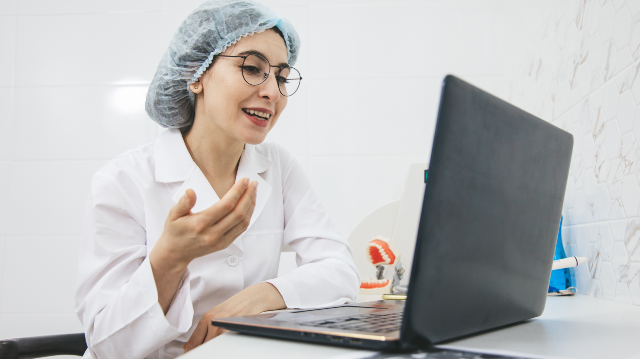
Step One: Schedule Your Free Virtual Consultation
Expect a 20 to 30 minute video consultation with Dr. KyungJin Kim or Dr. MinJi Kim. We'll discuss your dental history, missing teeth, previous treatments, bone loss concerns, treatment timeline expectations, and cost expectations. Have ready any photos of your teeth if possible, plus any existing dental X-rays or CT scans from your Houston dentist.
Step Two: Send Your Dental Information and Receive Quote
Send any existing X-rays by email or bring them, photos of your teeth, a list of medications, and a medical history summary. Dr. KyungJin Kim will review your imaging and provide preliminary assessment. She determines whether a bone graft is needed, which adds timeline and cost, or if direct implant placement is viable. You'll receive a detailed written plan showing procedure order, timeline including bone graft timeline if applicable, and itemized costs. All your concerns are addressed in writing, and you have the opportunity for follow-up consultation if needed. Typically, three to five business days pass before you receive your full assessment and quote.
Step Three: Confirm Surgery Dates and Prepare
Once you confirm, Dr. KyungJin Kim's coordinator works with you to schedule surgery dates fitting your availability. A 50 percent deposit confirms your dates, with the remaining 50 percent due one week before surgery. You'll receive a comprehensive pre-surgery guide including what medications to stop, what to avoid, what to bring, and a packing list. Our coordinator can recommend and assist with hotel bookings near the clinic in Jongno-gu. Plan to arrive two to three days before surgery to allow for check-in, final X-rays, and your pre-operative meeting with Dr. KyungJin Kim.
Contact Information
Phone: +82 2 722 0875
WhatsApp: Click Here
Email: info@nysdentalclinic.com
Website: https://www.nysdentalclinic.com
Location: Jongno-gu, Seoul, South Korea
Hours: The clinic operates from Monday and Tuesday between 10:00 AM and 7:00 PM, with extended hours on Wednesday until 8:00 PM. It remains closed on Thursday. On Friday, hours are from 10:00 AM to 6:00 PM, while weekend hours run from 9:30 AM to 1:30 PM on both Saturday and Sunday.
Frequently Asked Questions
What If The Implant Fails After I Return To The US? Does New York S Dental Clinic Guarantee The Work?
Implant failure is rare, occurring in less than 3 percent of cases, but we understand the concern. New York S Dental Clinic offers a 10-year implant warranty covering placement defects and surgical error. If an implant fails due to our surgical technique or material defect, not due to patient factors like smoking or non-compliance, we will replace it at no additional cost. Replacement happens either during a return visit to Seoul or by providing detailed surgical information for your US dentist to manage. We provide a detailed written guarantee document before treatment begins.
Can I Work Remotely From Seoul During Recovery Or Is That A Bad Idea?
You can absolutely work remotely starting day four to five if you choose. Many American contractor patients bring laptops and work from their hotel after the initial recovery period. What matters is honoring the physical restrictions: no heavy lifting for two or more weeks. Light office work including calls, emails, and planning doesn't interfere with surgical healing. Some patients prefer taking the full week completely off, while others want to stay productive. Both approaches are medically fine.
Will I Have A Speech Change Or Speech Impediment With Implants?
No. Once the crown is fully integrated and your mouth adapts to the new tooth, your speech is completely normal. In the immediate post-op period during the first one to two weeks, you might notice slight speech changes due to swelling and the temporary restoration. These resolve completely within two to four weeks as swelling subsides and your final crown is placed. Long-term, implants don't affect speech at all.
What Implant Brand Does New York S Dental Clinic Use And How Do I Know It's Quality?
We primarily use Osstem and Implantium, both South Korean brands that are FDA-approved and internationally recognized. Osstem is actually the number-two implant manufacturer globally, after Straumann, and is used by American dentists regularly. The brand isn't the differentiator; the surgical technique and bone quality are. We provide you detailed documentation of the exact implant used so you can research the brand independently and share this information with your Houston dentist.
Can I Get Just One Implant Placed Or Should I Do Both Teeth At Once?
You can absolutely have one implant placed while we do bone graft preparation for the second site, or even wait on the second implant entirely. The decision depends on your bone quality, timeline preferences, and financial situation. In your case, we recommend assessing both sites and likely treating both implants during the same surgical visit for efficiency and a single recovery period. However, the choice is entirely yours, and we'll discuss pros and cons of both approaches during your consultation.
Does My Wife Need To Fly With Me Or Can I Go Alone?
You can go alone if you prefer. However, many patients appreciate having a companion for the first few days post-surgery. If your wife comes along, she can pick you up from the procedure, help with light tasks during recovery, and enjoy Seoul during your healing period. We've had many spouse trips where the partner explores Seoul while you recover in your hotel. Some patients prefer to navigate this alone and do just fine. It's your personal choice.
What About COVID Or Other Health Risks When Traveling To Seoul?
Seoul maintains excellent healthcare standards and vaccination rates. Before traveling, check current CDC guidelines for Korea and ensure your vaccinations are current. We recommend travel insurance that covers health issues. Our clinic follows strict sterilization and infection control protocols matching international standards. We screen all patients for current illness before proceeding with surgery.
Can I Eat Korean Food During Recovery Or Is It Too Spicy?
Korean food is wonderful, but during your first week recovery, stick to soft options. Bibimbap without the spicy sauce, soft tofu soup, steamed rice, and gentle noodle soups work perfectly. Korean meals are actually great for recovery because they're flavorful but can be made soft. By week two, you can gradually introduce more textured foods. We provide specific dietary recommendations during your post-op consultation.
What Happens If I Need Emergency Care After Returning To Houston?
This is important. Our clinic provides a 24/7 emergency line if complications arise during your time in Seoul. If you develop issues after returning to Houston, contact your local dentist first while also reaching out to us immediately. We coordinate with your Houston dentist via WhatsApp and email for remote guidance. For true emergencies, your Houston emergency dental clinic can manage immediate issues while we provide surgical details and treatment recommendations. This coordination is seamless because modern dentistry is standardized globally.
Is There A Guarantee If Something Goes Wrong During Surgery?
Yes. Our surgical guarantee covers placement defects and surgical error for 10 years. Complications like infection or delayed healing that result from patient non-compliance with aftercare instructions are not covered, but complications resulting from our surgical technique are fully covered. We provide complete written guarantee documentation.
How Do I Know If I'm A Good Candidate For Implants Given My Bone Loss History?
Bone loss history doesn't disqualify you. It may require bone graft to create a foundation for implants, which extends your timeline by four to six months. During your free consultation, Dr. KyungJin Kim reviews your imaging and assesses whether direct implant placement is possible or bone graft is necessary. Most patients with bone loss remain excellent candidates once we prepare the bone properly. Age, overall health, and commitment to aftercare matter more than previous bone loss.
Can I Get Travel Insurance That Covers Dental Complications Abroad?
Yes. Several travel insurance providers cover dental tourism complications. Research plans that specifically mention dental work coverage for international travel. Costs typically run $50 to $150 for trip duration. Standard travel insurance may not cover elective dental work, so specifically request coverage for dental implants or cosmetic dental procedures.
How Long After Implant Placement Can I Return To Heavy Contractor Work?
By week three to four, you can return to light contractor work like planning and office tasks. By week four to six, you can resume most physical work. Heavy lifting and intense physical labor should wait until week six to eight. Your implant integrates silently over four to six months while you work normally. Once osseointegration is complete, zero restrictions apply. Dr. KyungJin Kim provides specific clearance at your follow-up appointments.
Will My Houston Dentist Accept Or Work With Implants Placed In Seoul?
Absolutely. American dentists work with implants placed anywhere in the world. We provide your Houston dentist with complete surgical details, implant specifications, brand information, and patient X-rays. Your dentist can seamlessly coordinate your final crown placement once osseointegration is complete. We provide a template letter specifically designed to help your local dentist understand your case perfectly.
What's The Success Rate For Dental Implants At New York S Dental Clinic?
Our success rate for dental implants in South Korea matches international standards at 95 to 98 percent. Success depends on bone quality, surgical precision, patient compliance with aftercare, and overall health status. Smoking reduces success rates, so we recommend cessation before and after surgery. With good bone quality and patient compliance, your expected success is 97 to 98 percent.
Conclusion
Dental implants in South Korea represent a smart, financially savvy solution for American patients facing the broken economics of US dental care. With the same quality, materials, and surgical standards as the United States but at 50 to 60 percent lower cost, South Korea has become the world's leading destination for informed patients who refuse to compromise on safety while seeking affordable solutions. The procedure is safe, well-established, and delivers results that last 20 to 30 or more years. Combined with a realistic seven-day recovery timeline, the decision becomes clear: address your missing teeth now, save $6,000 to $8,000, and restore your quality of life immediately.
Dr. KyungJin Kim and the team at New York S Dental Clinic have placed 400 or more implants annually with 95 percent or higher success rates. You're not taking a risk; you're making an informed choice supported by evidence, experience, and a commitment to long-term follow-up care that continues even after you return to Houston. The longer you wait, the more bone loss progresses and the more complex your eventual treatment becomes.
Your first step is simple. schedule your free virtual consultation with Dr. KyungJin Kim to discuss your specific case, timeline, and costs. Contact us today via WhatsApp Click Here, email -info@nysdentalclinic.com, or book online at https://www.nysdentalclinic.com. Let's schedule your consultation this week and get you on the path to restored function and confidence.
Author Bio
Dr. KyungJin Kim, DDS (Dental Surgery), Advanced Implant Certification
Dental Specialist in Restorative and Implant Dentistry, New York S Dental Clinic, Seoul
Dr. KyungJin Kim brings over ten years of experience in implant surgery and restorative dentistry with 400 or more implant procedures performed annually. She holds board certification in advanced restorative dentistry and maintains active membership in the Korean Dental Association, International Implant Society, and Asian Dental Association. Her specialization includes complex implant cases with bone loss and multiple tooth replacement for international patients. Dr. Kim is fluent in English and has trained extensively in the United States to ensure American patients receive world-class care and communication.
For consultations: WhatsApp [Click Here] | Email [info@nysdentalclinic.com] Website: | https://www.nysdentalclinic.com